



When someone who is close to you passes away, the decisions you make about their final arrangements can feel overwhelming. For those who valued environmental sustainability during their lifetime, choosing eco-friendly burial options offers a way to honor their legacy while minimizing impact on the planet.
This guide explores green caskets, biodegradable urns, and natural burial alternatives, helping you understand what makes these options different and how to select one that aligns with your values.
What Makes a Burial “Green”?
Definition of Green Funerals
A green burial represents a return to how humans have laid their dead to rest for generations. Rather than using synthetic materials and chemical preservation methods, green burials focus on allowing the body to return to the earth naturally. The practice prioritizes placing the body directly in the earth, avoiding embalming, and using biodegradable materials.
The difference between “green” and “natural” burials can be subtle. Both types focus on minimal environmental impact and biodegradable caskets, though a burial is only considered truly “green” if it takes place in a green-certified cemetery. Otherwise, the practice is referred to as a natural burial.
Environmental Impact vs Traditional Burial
Traditional burial practices carry a significant environmental footprint. An estimated 5.3 million gallons of embalming fluid are buried with the dead each year in the United States, and these chemicals eventually leach into surrounding soil and groundwater.
Conventional caskets made from metal or heavily treated hardwood can take decades to decompose, while concrete vaults prevent natural decomposition altogether.
Green burials eliminate these concerns. Without toxic preservation fluids, metal components, or concrete burial vaults, the body decomposes naturally and becomes part of the ecosystem.
Research from Washington State University found that human composting results in material that meets or exceeds state and federal safety standards, effectively reducing or eliminating pathogens, soluble metals, and pharmaceuticals.
Certification Standards (e.g., Green Burial Council)
The Green Burial Council serves as the leading authority for eco-friendly burial practices in North America. The organization certifies funeral homes, cemeteries, and products that follow strict environmental standards, ensuring no harmful chemicals and no false claims.
For products to earn GBC certification, they must meet rigorous requirements. All approved caskets, urns, and shrouds must be constructed from plant-derived, recycled plant-derived, natural, animal, or unfired earthen materials.
This includes everything from the shell to liners and adornments. The finishes, adhesives, and dyes used cannot release toxic byproducts when they decompose.
Key GBC Certification Requirements:
| Category | Standard |
|---|---|
| Materials | Plant-derived, natural, animal, or unfired earthen only |
| Chemical content | No PBT chemicals or carcinogens |
| Manufacturing | Minimal toxic emissions during production |
| Hardware | Biodegradable fasteners and handles (excluding brass/chrome) |
| Transportation | Carbon offsets for shipping required |
Learn more about comprehensive funeral planning at Funeral Services & Options and explore additional sustainable choices through Eco-Friendly Funeral Services.
Green Caskets: Materials, Features, and Benefits
What Qualifies a Casket as “Eco-Friendly”
Not every wooden casket qualifies as green. Traditional wooden caskets often include chemical treatments, metal hardware, synthetic linings, and varnishes that make them non-biodegradable. Even if the wood itself would eventually decompose, these additional components can take decades to break down.
Green burial caskets must be free from plastics, acrylics, and synthetic polymers, with fasteners and handles made predominantly from biodegradable, renewable resources. Manufacturers must also offset the carbon impact of transporting their products and ensure that adhesives and finishes don’t create toxic environments.
Biodegradable Casket Materials
The range of materials available for green caskets has expanded significantly in recent years. Each offers distinct characteristics:
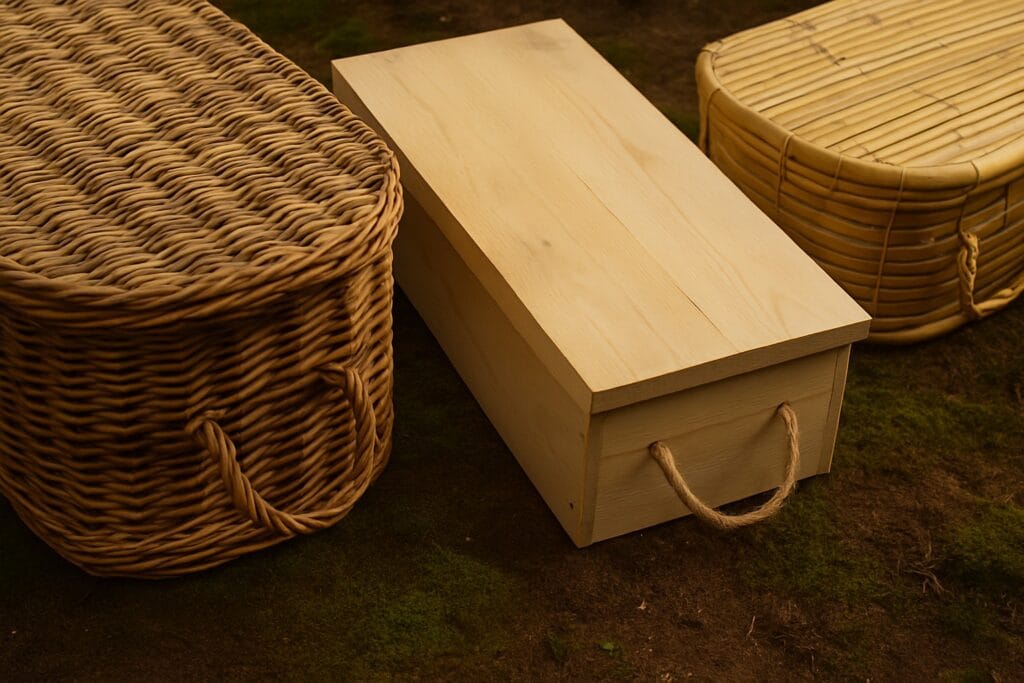
Wood Options: Simple pine, oak, elm, birch, maple, and poplar caskets without chemical treatments provide classic aesthetics while remaining biodegradable. These traditional wood options decompose naturally, though sustainably sourced and untreated versions are essential for truly eco-friendly burials.
Woven Fiber Caskets: Woven caskets made from materials like wicker, bamboo, seagrass, cotton, rattan, willow, and banana leaf are popular choices that don’t require heavy machinery for harvesting.
These materials grow quickly, making them highly renewable resources. The hand-crafted nature of many woven caskets also means they support small-scale artisans rather than large industrial operations.
Cardboard: Cardboard coffins offer the simplest and most economical option, often made with recycled paper and wood pulp sourced from sustainable forests. Beyond their affordability, cardboard caskets allow families to personalize them with artwork, written messages, or decorations, creating a unique memorial.
Innovative Materials: Wool felt, cork, and even mushroom-based mycelium represent newer options in the green casket market. Mycelium coffins can decompose within 30 to 45 days, much faster than traditional wooden caskets, while also accelerating the body’s natural decomposition process.
Coffin Lining & Hardware Considerations
Green burial caskets typically use unbleached natural cotton liners and minimal fixtures to maintain biodegradability. When hardware is necessary, it must come from natural, biodegradable sources. Some manufacturers use wooden pegs instead of metal screws, while others employ rope handles made from natural fibers like hemp or jute.
Cost Range and Environmental Certifications
Green caskets generally cost less than their traditional counterparts. The cost of a green burial shroud, carrier, or casket can range from $550 to $2,300, while traditional burial caskets generally range from $1,300 to well over $4,000.
Green Casket Price Comparison:
| Type | Price Range |
|---|---|
| Cotton/Linen Shroud | $100 – $300 |
| Cardboard Casket | $100 – $500 |
| Pine Box | $400 – $700 |
| Woven (Willow/Bamboo/Seagrass) | $700 – $1,500 |
| Untreated Hardwood | $1,000 – $2,300 |
When selecting a casket, look for GBC certification or similar third-party verification. Products earning the highest “Three Leaf” rating from the Green Burial Council meet the most stringent environmental standards.
For more information on funeral expenses, visit Funeral Costs Explained and compare options at Cremation vs Burial Comparison.
Green & Biodegradable Urns
Water-Soluble Urns (Salt, Paper, Gelatin)
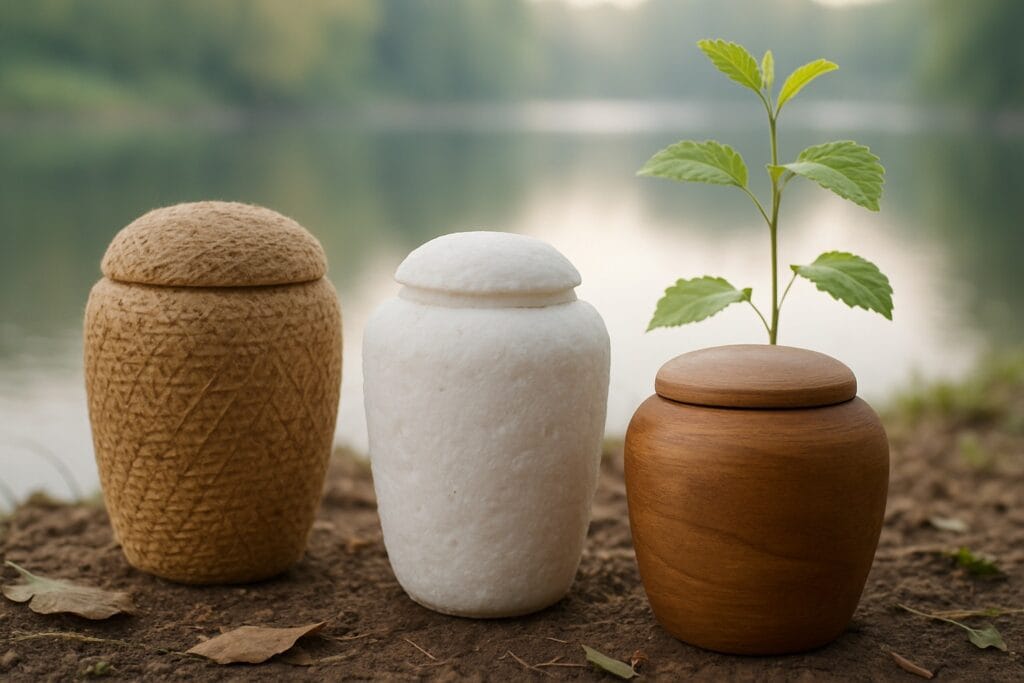
Water burial urns provide a meaningful option for those who felt connected to oceans, lakes, or rivers during their lifetime. The most common natural materials for water burial urns include recycled paper, sand, and salt, which dissolve without disrupting aquatic environments.
Paper Urns: Paper urns become waterlogged and start dissolving within an hour, though they can take 24 to 48 hours to disintegrate fully. These urns typically float for several minutes before gracefully sinking beneath the surface.
Salt Urns: Crafted from Himalayan rock salt blocks, these urns dissolve completely within a few hours of water placement. Each urn is individually hand-made from salt deposits believed to be over 250 million years old, making each one unique in appearance.
Sand and Gelatin Urns: Urns made from gelatin and sand can dissolve within days or possibly hours when placed in water, though they may take two to three months to break down if placed in the ground.
Soil-Biodegradable Urns (Plant Fiber, Bark, Bamboo)
For land burial, urns made from plant-based materials offer durable containers that decompose naturally over time. Common materials include mulberry bark, palm leaves, compressed paper, bamboo, and unfired clay. These urns remain stable during transport and ceremonies but break down once buried in soil.
Tree-Pod Urns & Regenerative Memorials
Tree burial represents one of the most popular eco-friendly options available today. The Living Urn system includes a biodegradable urn made from recycled plant-derived materials using only water, heat, and pressure, completely free from glues or toxic binding agents.
Unlike traditional seed pods that require expertise to germinate successfully, modern tree urn systems work with young trees rather than seeds. The process involves placing cremated remains in the bio-urn, adding a proprietary root protection additive, then lowering the tree’s roots into the urn before planting. This approach significantly increases success rates compared to starting from seeds.
The symbolic meaning resonates with many families. A living tree grows from the urn and cremated remains, creating an enduring memorial that family members can visit, touch, and watch flourish over the years.
When to Use Biodegradable Urns (cremation ashes laws)
Before choosing any urn or scattering location, understand the legal requirements. The Environmental Protection Agency requires that ocean dispersal take place at least three nautical miles from shore and that only biodegradable materials be used for sea burials. You must also notify the EPA after conducting a water burial.
For land burial, regulations vary significantly by location. Some cemeteries welcome biodegradable urns, while others have specific restrictions. Private property burials face fewer limitations in most states, though you should still check local ordinances.
Explore specific regulations at Scattering Ashes Laws by State and learn about packages at Cremation Packages Explained.
Natural Burial Alternatives
What Is Natural Burial?
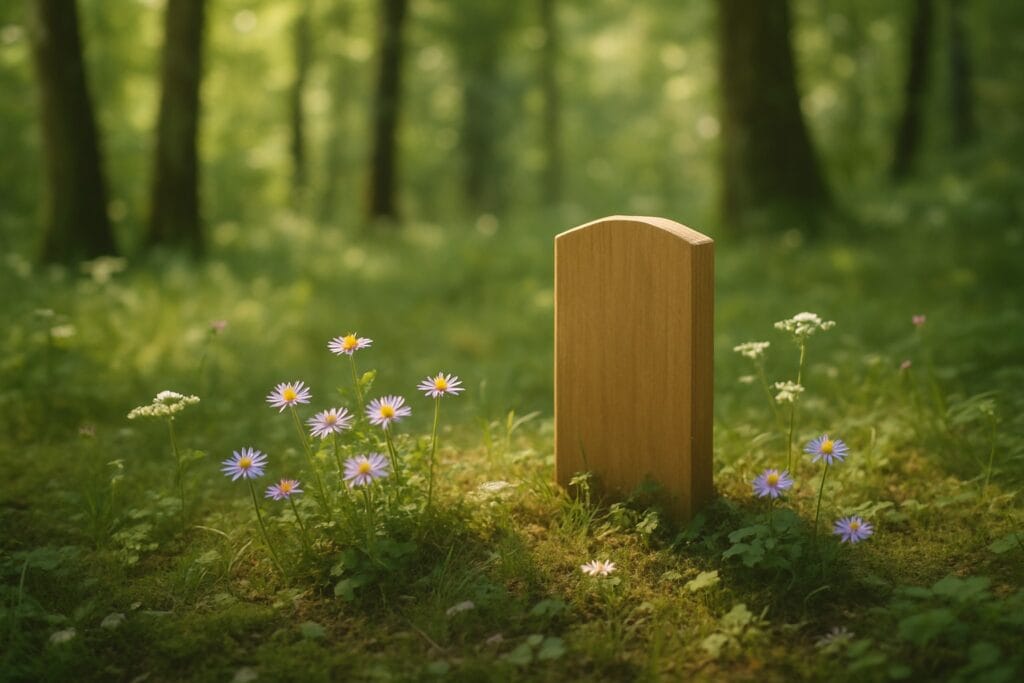
Natural burial strips away the modern funeral industry’s additions and returns to simpler practices. Bodies go into the ground without concrete vaults, chemical preservation, or synthetic materials. The decomposition process proceeds naturally, enriching the soil rather than contaminating it.
Shroud Burials & Traditional Cloth Wrapping
Shrouds represent the most minimalist burial container option. Burial shrouds made from natural fibers like cotton, wool, or linen biodegrade quickly and can cost between $200 and $1,000 depending on the fabric chosen.
Shrouds are typically paired with an open-top woven willow carrier with handles to help safely lift and transport the body. This combination provides dignity and ease of handling without compromising environmental principles.
Direct-to-Earth Burial Practices
For a burial to be considered green by the Green Burial Council, the body must be placed directly in the earth with no burial vault. This allows unimpeded decomposition. Without embalming or any coffin at all, a body generally takes eight to twelve years to decompose completely.
Biodegradable containers accelerate this timeline while maintaining structural integrity during transport and ceremony. When buried in a biodegradable casket, the complete decomposition process takes approximately ten years.
Aquamation (Water Cremation / Alkaline Hydrolysis)
Aquamation offers a gentler alternative to flame-based cremation. The process involves immersing the body in a pressurized metal cylinder filled with water and alkaline chemicals such as potassium hydroxide, using heat, pressure, and water to decompose the body.
Aquamation uses approximately 10% of the energy required for flame-based cremation, with no emissions of mercury, carbon dioxide, or particle matter into the air.
The process takes between three and sixteen hours, ultimately producing bone fragments similar to traditional cremation and a sterile liquid that can be safely processed like other wastewater.
Aquamation is currently legal in 28 states, though not all states have providers who have adopted the technology yet. The legality continues to expand as public awareness grows.
Human Composting (Recomposition)
Natural organic reduction, commonly called human composting, represents the newest addition to green burial options.
Human composting is currently legal in twelve states, including Maine, Minnesota, Maryland, Delaware, Arizona, California, Colorado, Nevada, New York, Oregon, Vermont, and Washington.
The process places a body in an aerated vessel covered with wood chips, alfalfa, and straw, creating an environment for naturally occurring microbes and bacteria to compost the body in approximately four weeks.
The result is roughly one cubic yard of nutrient-rich soil that can be returned to families or donated to conservation efforts.
Each time someone chooses organic reduction over cremation or conventional burial, approximately one metric ton of carbon dioxide is saved.
For more details on the overall process, visit What Happens During a Funeral Service.
Legal Requirements & Cemetery Rules for Green Burials
State/Country Regulations for Natural Burials
Green burials are legal in all 50 states, but specific requirements vary by location. Some states have detailed regulations governing home burials, transportation of unembalmed bodies, and documentation requirements, while others maintain minimal oversight.
If you plan to transport a body across state lines for burial, additional regulations apply. Each state has its own rules about permits, documentation, and acceptable preservation methods for interstate transport.
Cemetery Capabilities (Hybrid, Natural, Conservation Cemeteries)
Not all cemeteries accommodate green burials, even though the practice itself is legal everywhere. The Green Burial Council recognizes three types of certified cemeteries:
Hybrid Cemeteries: Traditional cemeteries that have designated a specific section for green burials. These facilities offer natural burial options within a conventional cemetery setting and business model.
Natural Burial Grounds: Dedicated exclusively to green burial practices. These cemeteries manage their land to protect biodiversity and prevent pollution, often maintaining natural landscapes rather than manicured lawns.
Conservation Burial Grounds: These properties combine green burial with active environmental conservation, using burial fees to support land protection and restoration efforts. Conservation cemeteries often partner with land trusts to ensure permanent protection.
Many conventional cemeteries require concrete grave liners or burial vaults to prevent ground settling. While any cemetery will allow you to use an eco-friendly casket, not all permit green burials due to vault requirements that contradict natural decomposition principles.
Transporting the Body for Green Burial
Without embalming, timing becomes more critical. It takes about 72 hours for a body to begin decomposing without intervention, though you can delay decomposition up to eight days by keeping the body cool with dry ice or refrigeration.
Refrigeration costs add approximately $35 to $100 per day, making it a practical short-term preservation method for families who need a few extra days to arrange services.
Permits & Documentation Needed
The same basic documentation required for traditional burials applies to green burials. You’ll need a death certificate, burial permit, and any additional paperwork required by your state or local jurisdiction.
Some states require permits for home burials or burials on private property. Others mandate that burials occur a certain distance from water sources or property lines.
Learn more at Legal Requirements for Burial and How to Obtain a Burial Permit.
Costs: Green vs Traditional Burial
Price Ranges (Caskets, Urns, Burial Plots)
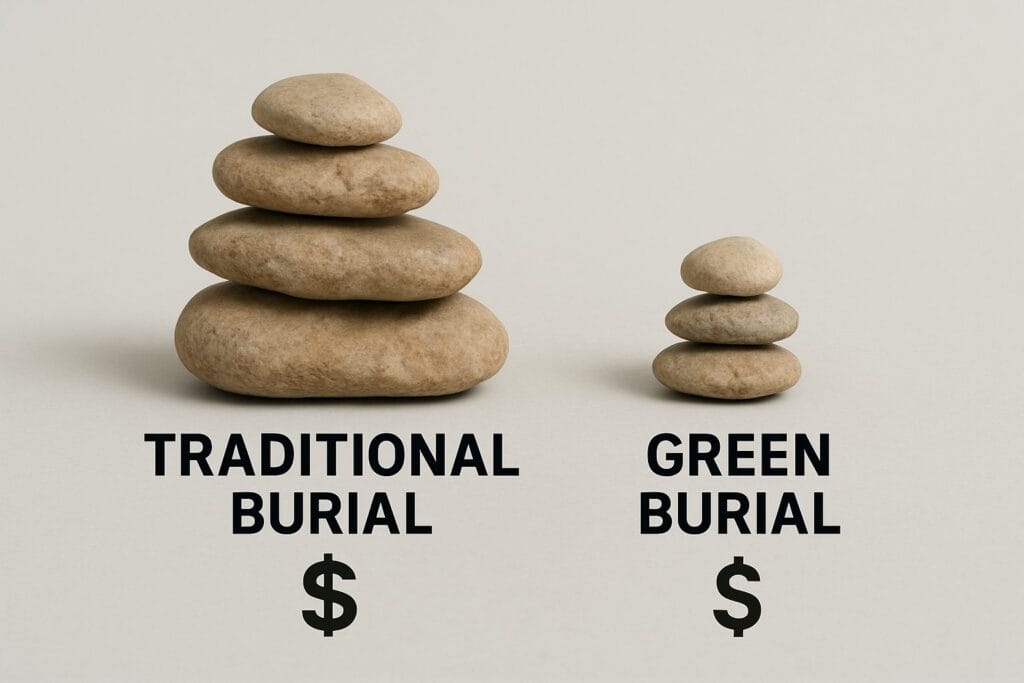
A green burial can be anywhere from $3,850 to $6,300 cheaper than a traditional one. The savings come from eliminating expensive caskets, concrete vaults, and chemical embalming.
Complete Cost Breakdown:
| Service | Traditional Burial | Green Burial |
|---|---|---|
| Embalming | $700+ | $0 (or refrigeration $35-100/day) |
| Casket | $2,000 – $5,000+ | $100 – $1,500 |
| Burial Vault | $1,400+ | $0 |
| Cemetery Plot | $1,000 – $4,000+ | $1,000 – $3,500 |
| Opening/Closing | $300 – $1,000 | $300 – $1,000 |
| Total Average | $8,000 – $12,000+ | $3,000 – $5,000 |
The median cost for traditional funeral services in the United States exceeds $11,000, while green burials typically fall in the $3,000 to $5,000 range for complete packages.
Why Some Green Options Are Cheaper
The cost savings stem from what’s excluded rather than what’s included. Green burials eliminate the most expensive components of traditional funerals:
- No embalming: Saves $700 or more
- No concrete vault: Saves approximately $1,400
- Simpler containers: Biodegradable caskets cost hundreds rather than thousands
- Minimal cemetery maintenance: Natural cemeteries don’t maintain manicured lawns
Traditional casket prices range from $900 to $20,000 but usually fall within the $2,000 to $5,000 range, while biodegradable caskets cost between $100 and $1,500.
Long-Term Environmental Savings
Beyond immediate cost savings, green burials offer long-term environmental benefits. Traditional cemeteries require ongoing maintenance with herbicides, pesticides, fertilizers, and irrigation systems. Conservation burial grounds maintain natural ecosystems instead, requiring minimal intervention.
Traditional cremation releases approximately 250,000 tons of carbon dioxide emissions annually, along with hundreds or thousands of pounds of mercury from dental fillings. Green alternatives like aquamation or human composting eliminate these emissions entirely.
For comprehensive cost planning, see Funeral Cost Breakdown and Budgeting a Funeral.
How to Choose the Right Eco-Friendly Option
Questions to Ask Funeral Providers
When investigating green burial options, ask providers:
- Are you certified by the Green Burial Council or another environmental organization?
- What specific biodegradable containers do you offer?
- Do you use non-toxic preservation methods if any preservation is needed?
- Which local cemeteries accept green burials?
- Can you handle transportation to a natural burial ground in another area?
- What documentation and permits will you manage?
- Are your pricing structures transparent and itemized?
Federal law protects your right to use outside products. According to the Federal Trade Commission’s Funeral Rule, you have the right to bring in any outside products to a funeral home, and the facility must use them at no additional charge.
Cultural or Religious Considerations
Green burial practices align naturally with many religious traditions. Islamic and Jewish burial customs have long emphasized prompt burial without embalming, using simple shrouds or plain wooden caskets. These traditions overlap significantly with modern green burial principles.
Some denominations have specific stances on newer methods like aquamation. While the Roman Catholic Church allows cremation as long as it doesn’t deny beliefs in the sacredness of the human body or resurrection of the dead, the Eastern Orthodox Church does not permit cremation.
Discussing your choices with religious leaders can help ensure your plans align with your faith tradition while meeting environmental goals.
Availability in Your Region
According to the Green Burial Council, about 62% of people in the United States are interested in green burial options, showing growing demand. However, availability varies significantly by region.
In New York, green burial plots can cost around $2,000 to $3,500 depending on the cemetery, while in smaller towns or rural areas in the Midwest or Southeast, costs can be closer to $1,000 to $2,500.
Use the Green Burial Council’s online directory to locate certified providers near you. If no green cemeteries exist in your immediate area, consider whether you’re willing to transport remains to a facility within reasonable distance.
Certifications to Look For
Third-party certification provides assurance that products and services truly meet environmental standards. Look for:
- Green Burial Council Certification: The gold standard for North American green burial products and services
- Forest Stewardship Council (FSC) Certification: For wood products from responsibly managed forests
- Cradle to Cradle Certification: For products designed with full lifecycle sustainability
Products used by many green burial providers have passed the Green Burial Council’s stringent guidelines, which require no toxic finishes, sustainable sourcing, and biodegradable construction.
For guidance on selecting providers, visit Choosing a Funeral Home and Questions to Ask a Funeral Home.
FAQs
Is a green burial legal everywhere?
Yes, green burials are legal in all 50 U.S. states. However, specific regulations about home burials, transportation requirements, and documentation vary by state. Some locations have more restrictions than others, particularly regarding burials on private property or near water sources.
Are biodegradable caskets durable enough?
Absolutely. Biodegradable woven caskets are enforced with wooden runners to ensure durability and safe handling. They remain structurally sound during transport and ceremonies. These caskets only begin decomposing after burial when exposed to soil moisture and microorganisms.
How long does a natural burial take to decompose?
The body naturally decomposes in one to three years, with soil composition, burial depth, and climate affecting the speed of the process. Woven casket materials like bamboo and willow take three to four years to decompose completely.
Are eco-friendly funerals cheaper?
Yes, in most cases. Green burials eliminate expensive elements like embalming, concrete vaults, and ornate caskets. The overall cost typically ranges from $3,000 to $5,000 compared to $8,000 to $12,000 or more for traditional burials.
Can any cemetery do a green burial?
Not necessarily. While all cemeteries will accept biodegradable caskets, many still require burial vaults or concrete liners that prevent natural decomposition. Look for cemeteries certified by the Green Burial Council or those specifically designated as natural burial grounds to ensure they accommodate true green burial practices.
Planning an eco-friendly farewell allows you to honor your values while caring for the planet. Whether you choose a biodegradable casket, a water-soluble urn, or an alternative method like aquamation, these options provide meaningful ways to return to the earth naturally.
