



The phone call comes when you least expect it. Someone you love has passed away, and suddenly you must plan a funeral while grieving.
Then comes another shock: funeral costs. With the median funeral costing $8,300 for burial and $6,280 for cremation with viewing, according to the National Funeral Directors Association, many families face financial strain during an already difficult time.
You might worry that a limited budget means an undignified farewell. This fear is understandable but unfounded.
Dignity does not require expensive caskets, elaborate services, or premium facilities. Dignity comes from honoring your loved one in ways that reflect their values and provide closure for those left behind.
This article shows you how to plan a respectful, meaningful funeral on a budget. You will learn which funeral elements are essential and which are optional, discover affordable service alternatives, understand how to compare prices fairly, and find financial assistance if needed.
Most importantly, you will see that thoughtful planning and informed choices create dignified farewells regardless of budget.
Understanding the Essential vs Optional Parts of a Funeral
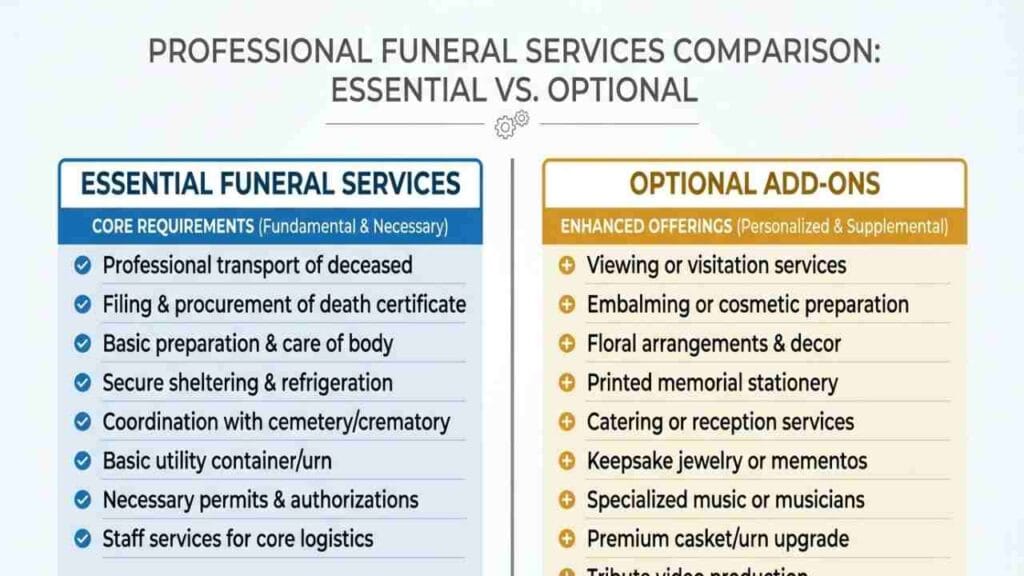
The first step to budget-conscious funeral planning is distinguishing between what you must have and what you can choose based on preferences and resources.
What Every Funeral Legally Requires
Very few elements are legally mandated. Understanding this empowers you to make real choices.
Legal requirements include:
- Filing a death certificate
- Disposition of the body through burial, cremation, or donation
- Certain permits depending on your state and disposition method
- A container for cremation (if choosing cremation)
- Transportation of remains from place of death
What is NOT legally required:
- Embalming (except in specific circumstances like cross-state transport or extended delays without refrigeration)
- Viewing or visitation
- Funeral ceremony or service
- Casket (if choosing cremation)
- Burial vault (required by some cemeteries but not by law)
- Specific funeral home services beyond basic body care and disposition
The FTC Funeral Rule protects consumers from being told certain items are required when they are not. Funeral homes must disclose what is legally required versus optional.
What Families Commonly Choose but Don’t Need
Tradition and social expectations lead many families to purchase services or items they assume are necessary. Common optional elements include:
Embalming: No state requires routine embalming. If choosing direct cremation or burial within 24 to 48 hours, embalming serves no purpose. Even for viewings, refrigeration can preserve remains for short periods without embalming.
Expensive caskets: For burial, a casket is needed, but prices range from under $1,000 to over $10,000. The least expensive casket serves the same practical purpose as the most expensive. For cremation, a simple cremation container (often cardboard or unfinished wood) costs $50 to $300 and is perfectly acceptable.
Funeral home facilities: Viewings, visitations, and memorial services can occur anywhere: homes, churches, community centers, parks, or gravesides. Funeral home chapels charge $400 to $800 for ceremony space. Eliminating this cost represents substantial savings.
Elaborate flowers and merchandise: Memorial folders, guest books, prayer cards, and funeral home flower arrangements are optional touches that can easily add $500 to $1,000 to your bill.
Cost Impact of Preparation, Venue, and Services
Let’s break down the financial impact of common choices:
| Service Element | Cost Range | Budget Alternative | Savings |
|---|---|---|---|
| Embalming | $500-$1,000 | Skip if not viewing or use refrigeration | $500-$1,000 |
| Funeral home chapel | $400-$800 | Home, church, graveside | $400-$800 |
| Premium casket | $5,000-$10,000 | Basic casket $800-$1,500 | $3,500-$8,500 |
| Funeral home catering | $500-$1,500 | Potluck at home | $500-$1,500 |
| Multi-day viewing | $600-$1,200 | Single day or none | $300-$1,200 |
Understanding where costs come from shows you where you can make different choices without sacrificing what truly matters.
To understand broader cost factors: What Affects Funeral Prices: Key Factors Explained
Affordable Funeral Service Options That Maintain Dignity
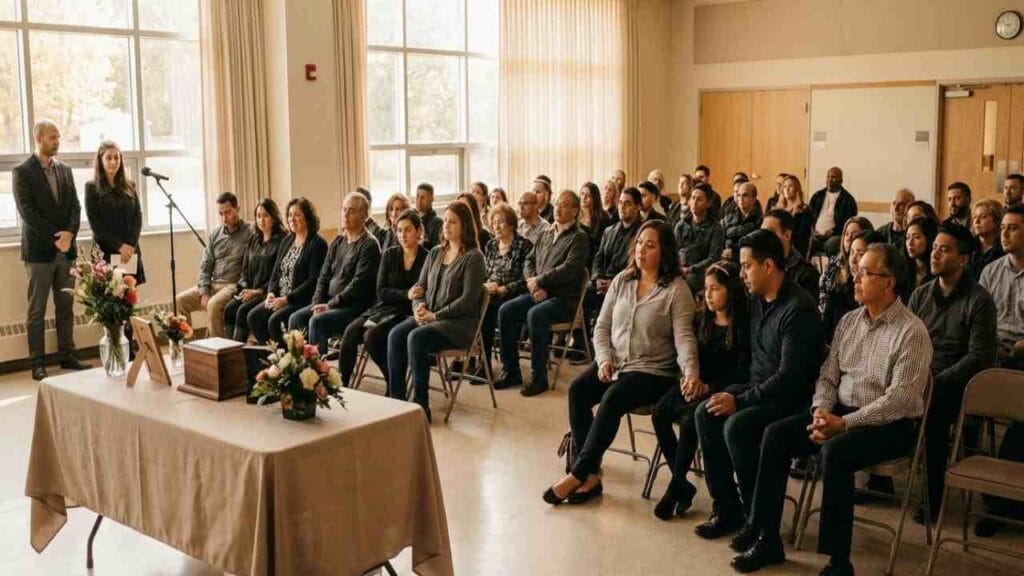
Multiple service models exist, each with different cost profiles. Choosing wisely can save thousands while still honoring your loved one meaningfully.
Direct Cremation: The Most Budget-Friendly Option
Direct cremation stands as the most affordable funeral option available. The average cost for direct cremation is $2,195, according to Choice Mutual, though prices range from $1,000 to $3,000 depending on location.
Direct cremation means the funeral home collects the deceased, files necessary paperwork, and performs cremation without embalming, viewing, or ceremony. You receive the cremated remains, typically in a simple container or urn.
What direct cremation includes:
- Transportation of remains to funeral home
- Basic services of funeral director and staff
- Necessary permits and death certificates
- Refrigeration until cremation
- Cremation fee
- Simple cremation container
- Basic urn or temporary container
What it does not include:
- Embalming or body preparation
- Viewing or visitation
- Use of facilities for services
- Ceremony coordination
- Premium casket or urn
Direct cremation eliminates most labor and facility costs while providing complete disposition. Families can then hold memorial services later, anywhere they choose, at minimal or no cost.
Despite being the least expensive option, direct cremation is entirely respectful and increasingly common. The 2025 cremation rate is projected at 63.4%, according to the NFDA, showing that most Americans now choose cremation.
Learn more: Direct Cremation vs Traditional Service
Simple Graveside Service Instead of Full Ceremony
For families who prefer burial, a graveside service offers a middle path between expensive traditional funerals and bare-bones immediate burial.
Graveside services skip the funeral home viewing and chapel ceremony. Instead, the ceremony occurs at the cemetery as the casket is committed to the ground. This approach eliminates funeral home facility fees and reduces service complexity.
Typical graveside service costs:
- Basic funeral home services: $1,500-$2,500
- Simple casket: $800-$1,500
- Transportation: $300-$500
- Graveside service coordination: $300-$500
- Cemetery plot: $1,000-$4,000
- Opening and closing grave: $1,000-$2,000
Total: Approximately $5,000-$11,000
Compare this to a traditional funeral with viewing, which typically costs $8,300 or more. The graveside approach saves $2,000 to $4,000 by eliminating embalming, viewing facilities, and multi-day services while still providing a meaningful ceremony.
Holding a Memorial at Home or Community Center
Memorial services, held after burial or cremation, offer flexibility and cost savings. When hosted at home, church, or community space instead of a funeral home, facility fees disappear.
Home memorial advantages:
- No facility rental ($400-$800 savings)
- Flexibility in timing and format
- Personal, intimate atmosphere
- Family can contribute food, decorations, setup
- No time limits imposed by facility schedules
You can still hire funeral director services for coordination and support without paying for their physical space. Some funeral homes offer coordination-only packages for $500 to $1,000.
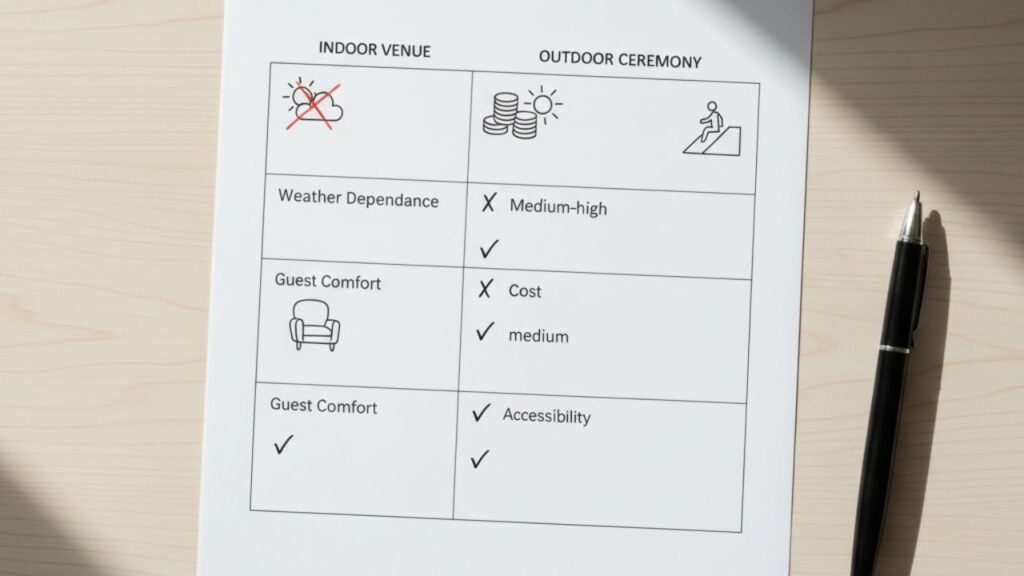
Churches often provide space free or for minimal donation for members. Community centers rent for $100 to $300, far less than funeral home chapels. Parks, gardens, or meaningful outdoor locations cost nothing and can be deeply meaningful.
Low-Cost Personalization That Still Feels Meaningful
Dignity and meaning come from thoughtfulness, not dollars spent. Consider these impactful yet inexpensive personalization ideas:
Photo displays: Family photos printed at home or local shop ($20-$50) create powerful visual memories. Digital frames looping photos cost $30 to $100 once but can be reused.
Memory sharing: Invite attendees to share stories, write memories in a journal, or record video remembrances. These cost nothing but create lasting value.
Music: Family members can provide live music, or you can play recorded favorites from a laptop or phone. Funeral homes often charge $200 to $500 for musicians; family-provided music is free.
Personal touches: Display favorite items, hobbies, uniforms, or collections that represent your loved one. These tell their story more effectively than expensive flowers.
Handwritten programs: Simple service programs printed at home or local shop cost $20 to $50 versus $150 to $300 through funeral homes.
How to Compare Funeral Home Prices Without Feeling Overwhelmed
The FTC Funeral Rule gives you tools to compare prices effectively, but you must know how to use them.
Requesting a General Price List (GPL)
Every funeral home must provide a General Price List itemizing all products and services with prices. You can request this over the phone, online, or in person without making any commitments.
The GPL must include:
- Basic services fee (non-declinable)
- Embalming
- Other preparation services
- Transportation
- Facility use for viewing, services, ceremonies
- Hearse and limousine fees
- Merchandise (caskets, urns, burial vaults)
- Cash advance items handled by funeral home
Request GPLs from three to five funeral homes in your area. Compare the same items across providers. Prices can vary by 30% to 50% for identical services in the same geographic area, according to Consumer Reports research.
Do not feel pressured to visit in person until you have reviewed prices. Many funeral homes now post GPLs online, making comparison shopping easier.
How to Identify Unnecessary Fees
Some fees are unavoidable; others appear unnecessarily inflated or duplicative. Watch for these red flags:
Unreasonable basic service fees: This mandatory fee covers overhead and director services, typically $1,500 to $2,500. If a funeral home charges $4,000 or more, their basic fee is unusually high and makes all their services more expensive.
Cash advance markups: Funeral homes often pay third parties (cemetery, crematory, flowers, obituaries) on your behalf, then bill you. Some add 10% to 20% service charges on these cash advance items. Ask if cash advances are passed through at actual cost or marked up.
Mandatory packages: The FTC Funeral Rule prohibits requiring packages. You must be allowed to buy items separately. If a funeral home insists you must purchase a package, they are violating federal law.
Dubious additional charges: Watch for vague fees like “administrative costs,” “documentation fees,” or “coordination charges” not clearly explained. Legitimate itemized services are fine; mysterious catch-all fees warrant questions.
How to Spot Predatory Pricing
Unfortunately, some funeral homes exploit grieving families through high-pressure sales tactics or deceptive practices.
Warning signs of predatory pricing:
- Refusing to provide prices over the phone or online
- Showing only expensive caskets first, hiding budget options
- Claiming embalming or certain caskets are required when they are not
- Pressuring immediate decisions without time to compare options
- Refusing to itemize services, only offering expensive packages
- Inflating urgency: “We must decide today” when that is not true
Trust your instincts. If a funeral home makes you uncomfortable or uses high-pressure tactics, walk away. Legitimate funeral homes respect your need to make informed decisions.
For step-by-step comparison guidance: How to Compare Funeral Quotes: A Step-by-Step Guide
Learn about financial options: Funeral Financing Options
Creating a Cost-Smart Funeral Plan Step-by-Step
A structured approach prevents overspending while ensuring nothing important is missed.
Step 1: Set a Realistic Budget
Before contacting any funeral home, determine what you can actually afford to spend. Be honest about your financial reality. There is no shame in having a limited budget.
Consider these funding sources:
- Life insurance proceeds
- Savings designated for this purpose
- Family contributions pooled together
- Social Security one-time death benefit ($255)
- Veterans benefits (up to $796 for burial, $300 for plot)
- Employer or union benefits
Write down your total available funds. This number guides every subsequent decision.
Step 2: Prioritize What Matters Most
Not all funeral elements hold equal importance for every family. Identify your top priorities:
What matters most to your family?
- Religious or cultural requirements
- Gathering space for community
- Viewing the body for closure
- Specific burial location
- Environmental concerns (green burial)
- Personalization elements
Rank your priorities. Spend your limited budget on what truly matters to you, skipping less important elements.
Step 3: Choose a Service Type That Fits Your Funds
Based on your budget and priorities, select an appropriate service level:
Budget under $2,000: Direct cremation with home memorial Budget $2,000-$4,000: Direct cremation with funeral home memorial or immediate burial with graveside service Budget $4,000-$6,000: Cremation with viewing and service or burial with minimal viewing Budget above $6,000: Traditional funeral with full services becomes feasible
Being realistic about service type eliminates the frustration of wanting services you cannot afford.
Step 4: Simplify Where Possible
For every funeral element, ask: “Is there a simpler, less expensive way to accomplish the same goal?”
Simplification strategies:
| Traditional Choice | Simplified Alternative | Savings |
|---|---|---|
| Three-day viewing | One evening viewing | $300-$600 |
| Elaborate casket | Simple casket or rental casket | $2,000-$8,000 |
| Funeral home chapel | Church or home | $400-$800 |
| Catered meal at funeral home | Potluck at church hall | $500-$1,500 |
| Floral arrangements from funeral home | Grocery store flowers | $200-$400 |
| Printed programs from funeral home | Home printed or digital | $100-$250 |
| Limousine for family | Personal vehicles | $200-$400 |
Each simplification maintains dignity while preserving resources for priorities that matter more to your family.
Step 5: Confirm All Prices in Writing
Before committing to any funeral arrangements, get everything in writing. The FTC Funeral Rule requires funeral homes to provide written itemized statements.
Your written confirmation should include:
- Every service you selected with individual prices
- Every product you purchased with prices
- All cash advance items and any markup
- Total cost including taxes
- Payment terms and schedule
- Refund or cancellation policy
If anything is unclear or seems different from what you discussed, speak up before signing. Verbal promises mean nothing if not documented.
For comprehensive planning guidance: How to Plan a Funeral
Financial Support Options That Can Reduce Funeral Expenses
Multiple programs exist to help families with funeral costs, though many people do not know about them.
Funeral Assistance Programs
Social Security Lump-Sum Death Payment: Surviving spouses or dependent children may qualify for a one-time payment of $255. While modest, every bit helps. Apply at your local Social Security office or call 1-800-772-1213.
Veterans Benefits: The Department of Veterans Affairs provides burial benefits for veterans and sometimes spouses. Benefits include:
- Burial in national cemetery at no charge
- Headstone or marker at no charge
- Burial flag at no charge
- Presidential Memorial Certificate
- Up to $796 burial allowance (for non-service-connected death)
- Up to $300 plot allowance
Contact the VA at 1-800-827-1000 or visit va.gov to determine eligibility.
State and County Assistance: Many states and counties provide indigent burial programs for families unable to afford funeral costs. Requirements vary by location, but assistance typically covers basic cremation or burial. Contact your county social services department.
FEMA Funeral Assistance: For deaths related to federally declared disasters, FEMA may provide up to $9,000 in funeral assistance. The COVID-19 pandemic qualified, with applications accepted through September 30, 2025. Call 844-684-6333 to apply.
Employer or Union Benefits
Many employers provide modest death benefits, typically $1,000 to $5,000, through group life insurance policies or benefit programs. Union members often have death benefits negotiated in collective bargaining agreements.
Check with the deceased’s employer or union to inquire about available benefits. These funds sometimes go unclaimed simply because families do not know they exist.
Life Insurance Payouts
Life insurance provides the most common source of funeral funding. However, insurance payouts take time to process. Funeral homes typically expect payment within 30 days.
Options for bridging the gap:
- Assignment of insurance benefits: Some funeral homes accept assignment, where the insurance company pays them directly. This allows funeral arrangements without upfront cash.
- Personal payment with reimbursement: Pay funeral costs from savings, then reimburse yourself when insurance pays out.
- Insurance company advances: Some insurers provide partial advances against expected benefits to cover immediate funeral expenses.
Contact the insurance company immediately after death to initiate the claims process and discuss options for accelerating payment.
Crowdfunding: When It’s Appropriate and Respectful
Online crowdfunding through platforms like GoFundMe has become common for funeral expenses. In 2023, funeral-related campaigns represented one of the most frequent categories on crowdfunding sites.
When crowdfunding works well:
- The deceased was young or died unexpectedly
- Family truly cannot afford basic funeral costs
- Community wants to help but needs organized way to contribute
- Campaign is created with honesty and dignity
Crowdfunding tips:
- Be transparent about actual costs and needs
- Share campaign through personal networks, not spam
- Express genuine gratitude for any contribution
- Update donors on arrangements and thank them publicly
- Account for how funds were used if campaign exceeds goal
Crowdfunding is not shameful. Many communities want to support grieving families but need clear information about how to help effectively.
How to Personalize a Budget-Friendly Funeral with Heart
The most meaningful funeral elements often cost little or nothing. What matters is thoughtfulness and love.
DIY Memorial Decorations
Simple handmade elements add personal touches without expense:
Memory boards: Cover foam boards with fabric, then pin photos, memorabilia, newspaper clippings, and mementos. Cost: $20-$40 for materials.
Photo collages: Print photos at home or drugstore, arrange on poster board with handwritten captions. Cost: $10-$30.
Candle lighting ceremony: Buy tea lights in bulk ($10 for 100), place in simple glass holders. Invite attendees to light candles while sharing memories.
Memory table: Display the deceased’s favorite items, awards, uniforms, hobbies, and collections on a simple table. Cost: $0 (use items from home).
Guest book alternatives: Provide nice paper and pens for writing memories, or ask guests to sign a plain casket or urn that becomes a personalized memorial. Cost: $5-$15.
Asking Family to Contribute Skills, Not Money
Every family has members with different talents. Invite contributions of skills and time instead of money:
- Musicians: Family members play instruments or sing
- Bakers: Provide desserts for reception
- Photographers: Document the service
- Writers: Draft obituary or eulogy
- Crafters: Create memory books, programs, decorations
- Gardeners: Provide flowers from their gardens
- Tech-savvy members: Create photo slideshows or video tributes
These contributions become more meaningful than purchased services because they represent personal love and effort.
Meaningful Rituals That Cost Nothing
The most powerful funeral moments often require zero budget:
Memory sharing: Invite attendees to speak, share stories, read poems, or offer reflections. This costs nothing but creates the emotional core of many services.
Moments of silence: Structured quiet reflection honors the deceased without any expense.
Symbolic gestures: Release balloons (biodegradable), plant flowers, write messages, create memory quilts from the deceased’s clothing. These carry deep meaning at minimal cost.
Music and readings: Favorite songs played from personal devices, meaningful poems or scriptures read by family, these cost nothing but provide structure and comfort.
Nature-based elements: Gathering at meaningful outdoor locations, incorporating natural elements like stones or shells, walking together in remembrance. Nature provides beautiful free venues and symbolism.
Mistakes to Avoid When Planning a Low-Cost Funeral

Good intentions can lead to problems if you are not careful. Avoid these common pitfalls.
Accepting the First Quote
Never commit to the first funeral home you contact. Price variations of 30% to 50% are common in the same area for identical services. Obtain quotes from at least three providers.
Even when time is limited, comparison shopping takes just a few hours but saves hundreds or thousands of dollars. Most decisions can wait 24 to 48 hours while you gather information.
Overpaying for Embalming or Preparation
Funeral homes may present embalming as necessary when it is not. Remember these facts:
- No law requires routine embalming
- Direct cremation and immediate burial need no embalming
- Refrigeration preserves remains for viewings within several days
- Open-casket embalmed viewings are optional, not mandatory
If a funeral director insists embalming is required, ask them to cite the specific law. If they cannot, you are being misled.
Buying from the Funeral Home Without Comparing
The FTC Funeral Rule allows you to purchase caskets, urns, and other merchandise from any source. Funeral homes cannot charge handling fees when you provide your own casket.
Online casket retailers charge 40% to 60% less than funeral homes for identical models. While this approach requires planning ahead, savings can reach $2,000 to $4,000.
Urns from online retailers, local artisans, or even general retailers cost a fraction of funeral home prices. A $750 funeral home urn might be $200 online.
Next Steps: Finalizing Your Affordable Funeral Plan
You now understand how to create a dignified, meaningful funeral on any budget. Your next steps involve putting knowledge into action.
Immediate actions:
- Determine your realistic budget
- Identify your top 2-3 priorities
- Choose appropriate service type for your budget
- Request General Price Lists from 3-5 funeral homes
- Compare prices for your selected service type
- Ask about available benefits and assistance
- Get everything in writing before committing
Remember these principles:
- Dignity comes from love and thoughtfulness, not money spent
- Federal law protects your right to choose only services you want
- Comparison shopping saves significant money
- Multiple resources exist to help with costs
- Personal touches often mean more than expensive purchases
- Community support can ease both emotional and financial burdens
Funeral planning during grief is difficult. But with clear information and realistic expectations, you can honor your loved one appropriately without creating financial hardship for yourself and your family.
Review detailed planning steps: Funeral Planning Checklist
Consider planning ahead: Prepaid Funeral Plans: Pros, Cons, and Legal Considerations
FAQs: Budget Funeral Planning
What is the most affordable type of funeral?
Direct cremation is the most affordable option, typically costing $1,000 to $3,000. This includes basic funeral director services, transportation, cremation, and a simple urn. You can hold a memorial service later at any location at minimal additional cost.
How much should I realistically budget for a simple funeral?
For direct cremation with a simple memorial, budget $1,500 to $3,500. For a modest burial with graveside service, budget $4,000 to $6,000. For a traditional funeral with viewing and burial, budget $7,000 to $10,000 minimum.
Can you plan a funeral without a funeral home?
Most states require licensed funeral directors to handle certain aspects of death care, particularly transportation and burial or cremation permits. However, some states allow family-directed funerals where families perform many tasks themselves. Check your state laws regarding home funerals and family-directed disposition.
Are prepaid funeral plans cheaper in the long run?
Prepaid plans can save money if purchased years before death, locking in today’s prices. However, plans carry risks including provider bankruptcy, limited transferability, and hidden fees. Compare current payment in savings accounts versus prepaid plans carefully before deciding.
What funeral elements can be skipped to save money?
You can skip embalming (unless legally required for specific circumstances), expensive caskets or urns, funeral home facilities, premium flower arrangements, elaborate programs and keepsakes, limousine service, and multiple-day viewings while still having a dignified service.
Is direct cremation considered respectful?
Absolutely. Direct cremation is chosen by millions of families annually and is entirely respectful. You can hold meaningful memorial services after cremation. The absence of viewing or elaborate ceremonies does not diminish respect or love for the deceased.
How can I avoid hidden funeral fees?
Request itemized General Price Lists, ask about cash advance markup policies, confirm what is included in basic service fees, get everything in writing before committing, and do not hesitate to question charges you do not understand. The FTC Funeral Rule protects against deceptive practices.
