



When distance, health, or circumstances prevent people from attending a funeral in person, technology bridges the gap.
Digital tools now play a significant role in how families gather, remember, and honor their deceased loved ones. From livestreamed services to online memorial pages, funeral technology has changed what’s possible in times of loss.
How Technology Is Transforming Modern Funerals
Funeral technology adoption has accelerated dramatically in recent years. According to the National Funeral Directors Association’s 2025 Consumer Awareness and Preferences Study, nearly 30% of families now complete all funeral arrangements online, while 40% of consumers have used digital funeral service options.
Several factors drive this shift. Global families scattered across continents need ways to participate when travel is impossible.
Elderly or disabled relatives who cannot travel still want to be present for farewells. Public health concerns have made virtual attendance necessary at times. Cost considerations also matter, as travel expenses can exceed funeral costs themselves.
The Digital Funeral Services Market reached $1.51 billion in 2024 and is projected to grow to $2.62 billion by 2033, according to Market Growth Reports. This growth reflects not just necessity but preference. Many families now expect digital options as standard funeral home services.
Technology serves three primary purposes in modern funerals: accessibility, personalization, and preservation. It enables remote participation, helps families create meaningful tributes, and provides lasting ways to remember and honor the deceased.
These tools don’t replace traditional services but expand options. Families can blend in-person gatherings with virtual attendance, creating hybrid experiences that include everyone who wants to participate, regardless of location.
For families exploring different types of services that incorporate technology, see Understanding Funeral Service Options: From Traditional to Modern Farewells.
Livestreaming Funerals: Bringing Loved Ones Together from Anywhere
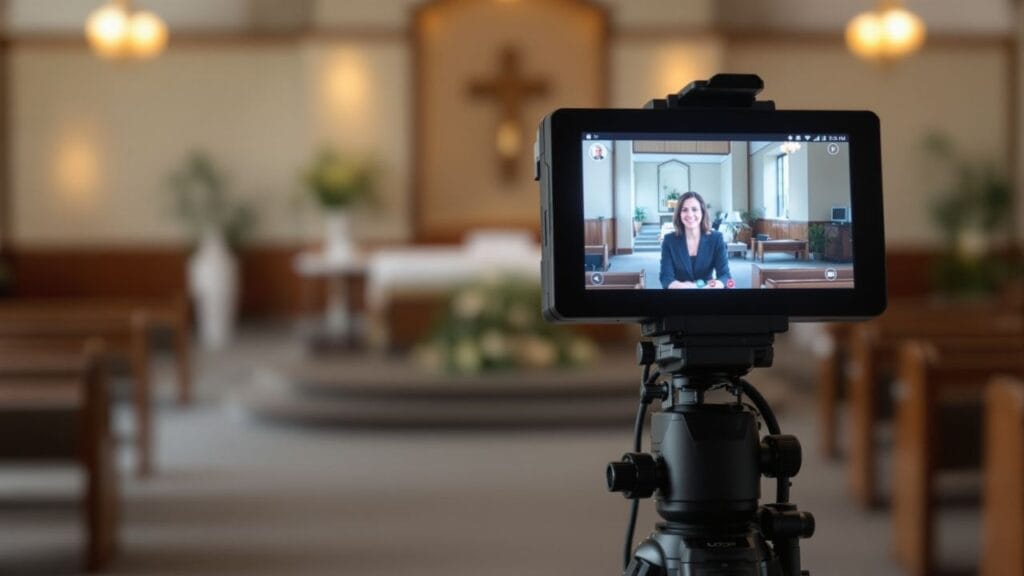
Funeral livestreaming allows remote attendees to watch services in real time through internet-connected devices. This technology has become one of the most requested funeral services.
What Funeral Livestreaming Is and How It Works
Livestreaming transmits live video and audio from the funeral service location to viewers watching on computers, tablets, or smartphones.
The technology is straightforward. Cameras capture the service, audio equipment records speakers and music, and streaming software sends the feed to an online platform where authorized viewers access it.
Most funeral homes use dedicated streaming services designed specifically for memorial services. These platforms provide:
- Private access links: Only invited guests can view the stream
- High definition video: Clear picture quality from multiple camera angles
- Professional audio: Microphones capture eulogies, music, and spoken words
- Recording capability: Services are typically recorded for later viewing
- Interactive features: Some platforms allow virtual attendees to send messages or condolences during the service
According to industry research, 64% of funeral homes now livestream or webcast every funeral service they conduct. This represents a significant increase from pre-2020 levels, when virtual services were rare.
The setup typically includes one to three cameras positioned discretely in the service space, wireless microphones for speakers, and streaming equipment operated by trained staff or funeral directors.
Benefits for Families Who Cannot Attend in Person
Livestreaming solves the problem of physical distance. According to TribuCast data, an average of 40 guests register to attend funeral ceremonies via livestream, not including others who may watch with them on shared screens.
Key benefits include:
Accessibility for elderly and disabled family members: Those in nursing homes, hospitals, or with mobility limitations can participate fully from their current location.
International family inclusion: Relatives living abroad can attend without the cost and complexity of international travel.
Work and scheduling conflicts: People unable to take time off work or who live too far for quick trips can still be present for the service.
Health concerns: Immunocompromised individuals or those recovering from illness can participate safely.
Weather or travel disruptions: When storms, flight cancellations, or other emergencies prevent travel, livestreaming ensures no one misses the service.
According to a 2025 survey by Choice Mutual, 45% of respondents feel comfortable with livestreamed funerals for remote attendance. This acceptance reflects growing recognition that virtual presence is better than absence when physical attendance isn’t possible.
Common Platforms Funeral Homes Use
Funeral homes partner with specialized platforms designed for memorial services, rather than using general videoconferencing tools. Common platforms include:
| Platform | Features | Privacy Options |
|---|---|---|
| TribuCast | Multi-camera streaming, recording, user-friendly access | Private, password-protected |
| Gather | Integrated case management and streaming, compliance tools | Private links, limited sharing |
| OneRoom | HD streaming, digital guestbook integration | Invitation-only access |
| FuneralVue | Professional streaming service, technical support | Private or public options |
| Zoom/Vimeo | General platforms sometimes used | Varies by setup |
According to NFDA data on funeral home technology, specialized platforms offer advantages over general videoconferencing tools. They’re designed specifically for funeral services, providing appropriate features like memorial slideshows, digital guestbooks, and long-term recording storage.
Some funeral homes provide streaming at no additional cost, while others charge between $80 and $300 for the service, according to reporting in The New York Times. The price variation depends on equipment quality, platform features, and whether professional videography is included.
When selecting a funeral home, families interested in livestreaming should ask about available platforms, costs, and whether recordings will be accessible after the service.
For guidance on different ceremony types that can be livestreamed, see Types of Funeral Ceremonies: Religious, Non-Religious, and Hybrid.
Digital Tributes: Videos, Slideshows, and Personalized Presentations
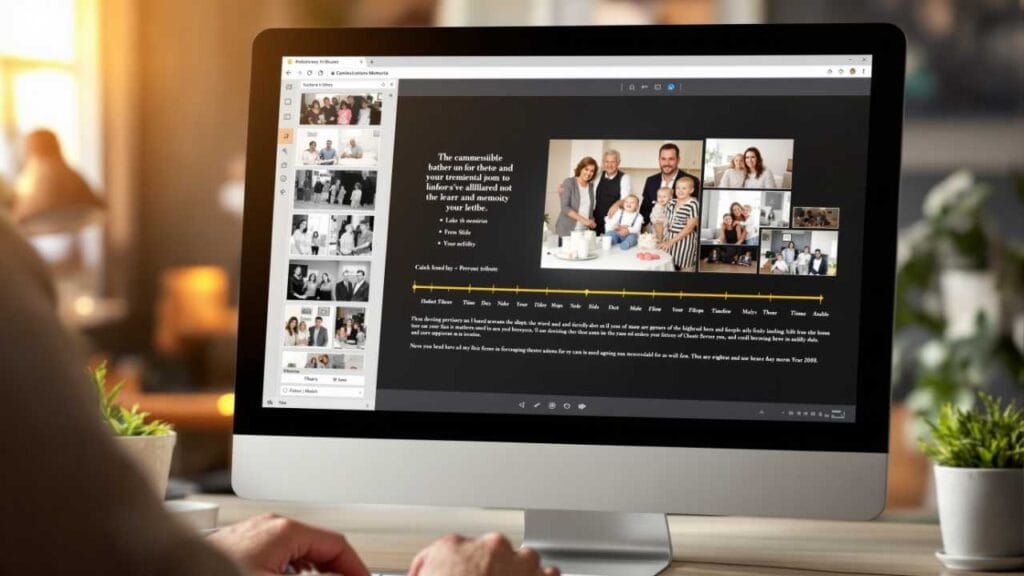
Digital tributes transform photographs, videos, and memories into visual presentations that honor the deceased during services and beyond. These tools have become central to funeral personalization.
What Digital Tributes Include
A digital tribute is a multimedia presentation featuring the deceased’s life story. Common elements include:
Photo slideshows: Collections of photographs from throughout the person’s life, often arranged chronologically or thematically. These typically display during visitation periods or at the beginning or end of services.
Video montages: Edited video clips showing the person at different life stages, combined with music, transitions, and text captions. Professional editors or family members can create these using standard video editing software.
Music integration: Background music that was meaningful to the deceased or family. Songs can accompany slideshows or play as standalone memorial elements.
Text and quotes: Favorite sayings, life philosophies, or memorial messages integrated into visual presentations.
Voice recordings: If available, audio of the deceased’s voice can be incorporated into tributes.
According to the 2025 Consumer Awareness study, digital tributes have increased by 39% in recent years. Families appreciate having a visual, shareable way to celebrate their loved one’s life.
Creation tools range from simple (smartphone apps and basic slideshow software) to professional video editing services offered by funeral homes or independent creators. Many funeral homes include basic tribute creation in their service packages.
How These Tools Personalize Services
Digital tributes serve multiple purposes in the grief and remembrance process. They give families a project to work on together during the painful days after death, creating something positive while processing loss. Gathering photos and selecting music becomes a collaborative family activity.
During services, tributes provide a focal point for reflection. Guests see the person’s full life represented, not just their final chapter. Young children who didn’t know the deceased in earlier years learn family history. Friends from different life periods see sides of the person they may not have known.
The digital format enables easy sharing. Files can be emailed, posted to memorial websites, or given to family members on flash drives. Unlike physical photo boards that must be transported and eventually stored, digital tributes live on multiple devices and platforms.
According to research on funeral preferences, 73% of consumers value creating a lasting digital legacy. Tributes fulfill this desire by creating permanent, accessible records of a person’s life.
For more ideas on memorial personalization, visit Memorial Ideas to Celebrate a Loved One’s Life.
Online Memorial Pages and Virtual Guestbooks
Beyond the funeral service itself, online memorial pages create lasting digital spaces where the deceased’s memory lives on and communities gather to share support.
What Online Memorial Pages Are
An online memorial page is a dedicated website or webpage honoring a specific person who has died. These pages typically include:
- Biographical information: Birth and death dates, life story, achievements
- Photo and video galleries: Curated collections of images and videos
- Obituary: Formal death notice and life summary
- Service information: Date, time, and location details for funeral or memorial services
- Condolence section: Space for visitors to leave messages, memories, and sympathy
- Memorial donations: Links to charities or causes the deceased supported
- Life timeline: Chronological presentation of major life events
According to the Digital Funeral Services Market analysis, there are now over 1.7 million digital funeral and memorial events taking place globally each year, representing a 39% increase from previous years.
Memorial pages can be created through funeral home websites, dedicated memorial platforms like ForeverMissed or GatheringUs, or social media memorial pages. They remain accessible indefinitely, creating permanent spaces for remembrance.
How Virtual Guestbooks Support Connection
Virtual guestbooks extend the traditional concept of signing a book at a service. Online versions allow unlimited entries from anywhere in the world, at any time.
Benefits include:
Asynchronous participation: People can leave messages weeks or months after the funeral, when memories surface or grief hits anew.
Global reach: Friends from the deceased’s entire life, regardless of geographic location, can contribute.
Preserved memories: Unlike paper guestbooks that may be stored away, online versions remain accessible for family members to revisit.
Ongoing community: Some families return to memorial pages on anniversaries, birthdays, or during difficult moments, adding new messages and finding comfort in reading others’ contributions.
Support for family: According to grief research, reading others’ memories and condolences can be deeply comforting for bereaved families, validating the deceased’s impact on many lives.
Memorial pages also serve practical purposes. They become central information hubs where families post updates about service arrangements, donation information, and other logistics that everyone needs to know.
For guidance on creating an online memorial, see Creating an Online Memorial or Tribute Page.
Hybrid Funerals: Combining In-Person and Virtual Attendancee
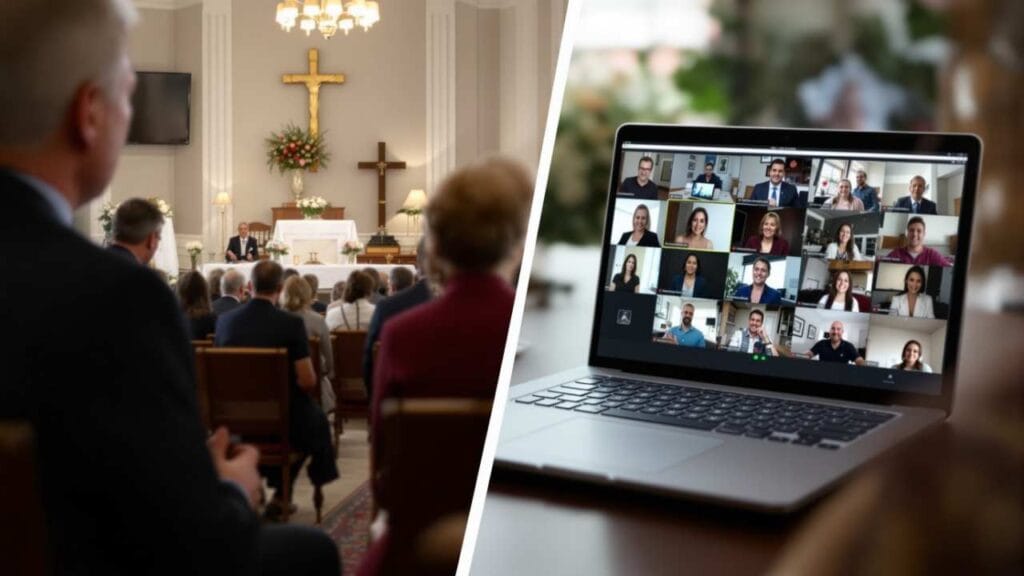
Hybrid funerals blend physical and virtual attendance, creating services where some people gather in person while others participate remotely. This model has become the new standard for many families.
Why Hybrid Funerals Are Increasing
The hybrid model addresses the reality of modern, geographically dispersed families. According to U.S. Census data, Americans increasingly live far from their birthplaces and extended families. When death occurs, gathering everyone in one location is often impractical.
Hybrid services respect both the need for physical presence and the value of remote participation. They acknowledge that not everyone can travel but everyone should have the opportunity to attend.
Families choose hybrid formats because:
- Inclusivity: No one is excluded due to distance, health, or finances
- Flexibility: Different family members can participate in ways that work for their circumstances
- Reach: Friends from throughout the deceased’s life can attend, regardless of where they now live
- Practicality: Reduces pressure on out-of-town guests to make expensive, disruptive travel arrangements
- Accessibility: People with disabilities, anxiety about crowds, or other concerns have comfortable participation options
According to the NFDA 2025 Cremation & Burial Report, online and virtual services continue growing as a standard offering, with 36.3% of funeral homes offering online cremation arrangements and an additional 25% planning to add this option.
Tools and Setups Funeral Homes Use
Creating effective hybrid services requires intentional planning and appropriate equipment. Successful hybrid funerals use:
Camera systems: Multiple cameras capture different angles, including wide shots of the service space and close-ups of speakers. Funeral homes may use professional video cameras or high-quality webcams.
Audio equipment: Wireless microphones for officiants and speakers, sound mixing boards, and clear audio feed to the streaming platform. Poor audio is the most common complaint about virtual services.
Projection screens: Some services project virtual attendees’ faces in the service space, making their presence visible to in-person guests.
Two-way interaction: Advanced setups enable virtual attendees to hear but also be heard, so they can participate in responsive readings or speak during memory-sharing portions.
Technical operators: Someone must manage cameras, audio levels, and the streaming platform during the service. Many funeral homes employ staff specifically trained in streaming technology.
Platform selection: Reliable streaming platforms with adequate bandwidth and backup systems in case of technical difficulties.
According to funeral industry technology reports, investment in streaming equipment has become a priority for funeral homes seeking to remain competitive. Families increasingly choose providers based on their technical capabilities.
When selecting a funeral home, ask about their hybrid service experience and whether you can see examples of past streamed services. Inquire about backup plans if technical problems occur.
For guidance on choosing providers with appropriate technology, see How to Choose the Right Funeral Home: A Compassionate Guide.
Digital Tools That Support Funeral Planning
Beyond services themselves, technology streamlines the planning process, making arrangements easier during difficult times.
Online Scheduling and Arrangement Forms
Many funeral homes now offer online arrangement tools that allow families to make decisions and provide information from home rather than spending hours in funeral home offices.
Digital arrangement platforms typically include:
- Service selection: Choose burial or cremation, service type, and timing
- Product selection: View and select caskets, urns, flowers, and memorial products online
- Information collection: Complete forms providing deceased’s personal information for death certificates
- Document upload: Submit identification, insurance policies, and other required documents electronically
- Payment options: Process deposits and payments securely online
According to the NFDA Consumer Awareness study, nearly 30% of families now complete all funeral arrangements online. This represents a significant shift in how death care services are purchased.
Benefits of digital planning tools include:
- Reduced stress: Families can work at their own pace without pressure
- Better decisions: Time to research options and compare pricing
- Convenience: Available 24/7, not just during business hours
- Transparency: Clear pricing and options visible before committing
- Collaboration: Multiple family members can review and contribute to decisions
Virtual Meetings With Funeral Directors
Video conferencing allows families to consult with funeral directors without traveling to the funeral home. Platforms like Zoom, Microsoft Teams, or specialized funeral service software enable face-to-face conversations with screen sharing for documents and pricing.
Virtual consultations work well for:
- Initial planning conversations: Discussing options, pricing, and family preferences
- Preplanning: People arranging their own services in advance
- Distant families: Relatives in different cities coordinating together
- Follow-up meetings: Finalizing details or answering questions after initial in-person meetings
According to NFDA data, 40% of consumers have used online funeral planning services, indicating widespread acceptance of digital consultation methods.
Preplanning and Document Upload Tools
Digital preplanning platforms allow people to arrange their own funerals in advance, recording preferences and paying ahead. These tools include:
- Preference documentation: Record wishes for service type, music, readings, and other details
- Financial planning: Lock in prices and make payment arrangements
- Legal documents: Store advance directives, wills, and other important papers
- Family access: Designate who can access plans and when
- Updates: Revise choices as circumstances or preferences change
According to consumer research, preplanning provides peace of mind and relieves families of difficult decisions during grief. Digital tools make the process more accessible and less intimidating than traditional preplanning methods.
For more information on what happens during services, see What Happens During a Funeral Service: Step-by-Step Overview.
Ethical Considerations and Privacy in Funeral Technology

As funeral technology expands, important questions about privacy, consent, and appropriate use deserve careful consideration.
Recording permissions: Not everyone wants their image broadcast or recorded. Obtain permission from speakers before streaming or recording. Some families choose to stream only portions of services, keeping certain elements private.
Personal data security: Online platforms collect sensitive personal information. Choose funeral homes and service providers that use secure, encrypted systems. Ask how data is stored and who has access. Understand how long recordings and information will be retained.
Respect for cultural or religious practices: Some faith traditions prohibit photography or recording during funeral services. Others have specific rules about how the deceased can be represented visually. Discuss cultural and religious considerations with religious leaders or cultural advisors before implementing technology.
Consent for posting: Before sharing images or videos publicly, get family consensus. Not everyone wants their grief or the funeral documented on social media.
Children’s privacy: Consider carefully before including children’s images in public memorial materials.
Ongoing access: Clarify who controls memorial pages and social media accounts long-term. What happens if the family wants content removed? Who can add or delete information?
According to the 2025 technology survey, 65% of consumers have concerns about incorporating artificial intelligence or technology into funeral services, reflecting uncertainty about appropriate boundaries.
Families should discuss these issues openly before implementing technology. Funeral homes should have clear policies about privacy, consent, and data handling. When in doubt, prioritize privacy and respect over convenience or breadth of sharing.
How to Decide Whether to Use Technology in a Funeral
Technology offers powerful tools but isn’t required for meaningful funerals. Consider these factors when deciding which tools fit your needs.
When livestreaming is ideal:
- Multiple relatives live far away and cannot travel
- Health or mobility issues prevent attendance
- Quick service timing makes travel logistics impossible
- You want services recorded for those who miss it
- The deceased valued inclusivity and accessibility
When digital tributes add value:
- You have abundant photographs and videos to share
- The deceased had a long, well-documented life
- Multiple generations want to see life stages they didn’t witness
- Creating the tribute helps family process grief together
- You want a lasting legacy project
When memorial pages serve well:
- The deceased had friends and colleagues across many locations
- You want a permanent space for ongoing remembrance
- Family members appreciate reading others’ memories and condolences
- You need a central location for service information and updates
- The deceased’s impact extended across many communities
When simpler approaches work better:
- Small, intimate gatherings where everyone knows each other
- Faith traditions that restrict technology use
- Family preference for privacy and minimal digital footprint
- Desire to minimize screen time and digital distractions
- Budget constraints (though many tools are free or low-cost)
Technology should support, not complicate, the funeral process. If tools add stress or conflict, skip them. The goal is meaningful remembrance, whether that happens through technology or traditional means.
When choosing funeral homes, ask about available technology but also about flexibility. Providers should offer options, not requirements. For guidance on evaluating funeral home capabilities, see Comparing Funeral Home Facilities: What to Look For.
Conclusion
Funeral technology has fundamentally changed what’s possible when families face loss. Livestreaming connects far-flung relatives. Digital tributes preserve and celebrate life stories. Online memorials create permanent spaces for community and remembrance. These tools don’t replace traditional services but expand options and accessibility.
According to current data, nearly 30% of families now handle arrangements online, 64% of funeral homes offer streaming, and digital memorial events have increased by 39%. These numbers reflect both necessity and genuine value. Technology meets real needs in our geographically dispersed, digitally connected world.
The best uses of funeral technology are those that serve authentic family needs rather than following trends. Consider your specific situation, your loved one’s preferences, and your family’s comfort level. Use tools that genuinely help you gather, grieve, and remember, whether those tools are digital or traditional.
If you’re navigating loss and need support, remember that grief extends beyond the funeral. Technology can help during planning and services, but healing requires time, community, and compassionate support. For guidance on the path ahead, see Coping After Loss: A Compassionate Guide to Grief and Healing.
