



When a family faces the loss of someone they love, the decisions that follow can feel overwhelming. Cremation has become a choice for many American families according to the National Funeral Directors Association, the U.S. cremation rate reached 63.4% in 2025 and is projected to rise to 82.3% by 2045.
Understanding what happens during cremation can help you make informed decisions during an already difficult time. This guide walks you through the entire process, from the first legal steps to the meaningful choices that come after.
Understanding Cremation
Cremation is a method of final disposition that uses heat to reduce a body to bone fragments, which are then processed into what most people call “ashes” or “cremated remains.” The process takes place in a specially designed cremation chamber, sometimes called a retort, where temperatures reach between 1,400°F and 1,800°F.
Why Families Choose Cremation
People choose cremation for many reasons. Some families appreciate the flexibility it offers for memorial services you’re not bound by the same time constraints as traditional burial.
Others find comfort in the portability of cremated remains, allowing them to keep their loved one close or scatter ashes in a meaningful location.
Cost plays a role too. According to the National Funeral Directors Association, the median cost of a funeral with cremation was $6,280 in 2023, compared to $8,300 for a traditional funeral with viewing and burial. For families managing tight budgets while grieving, this difference matters.
Cremation, Burial, and Green Options
Cremation differs from traditional burial in several ways. Burial involves placing the body in a casket and interring it in a cemetery plot, often after embalming. Cremation eliminates the need for embalming, a casket (though a cremation container is used), and a burial plot.
Green burial, another option gaining attention, focuses on returning the body to the earth naturally without embalming chemicals or non-biodegradable materials.
Each option carries its own practical and emotional considerations, and none is inherently “better” than another what matters is what feels right for your family. If you’re weighing these choices, our guide to burial vs cremation can help.
When Cremation May Not Be Allowed
While cremation is widely accepted, certain circumstances require special consideration. If a death is under investigation by a medical examiner or coroner, cremation may be delayed until the investigation concludes. Some religious traditions also prohibit cremation, which we’ll discuss later in this guide.
Legal Requirements and Documentation Before Cremation
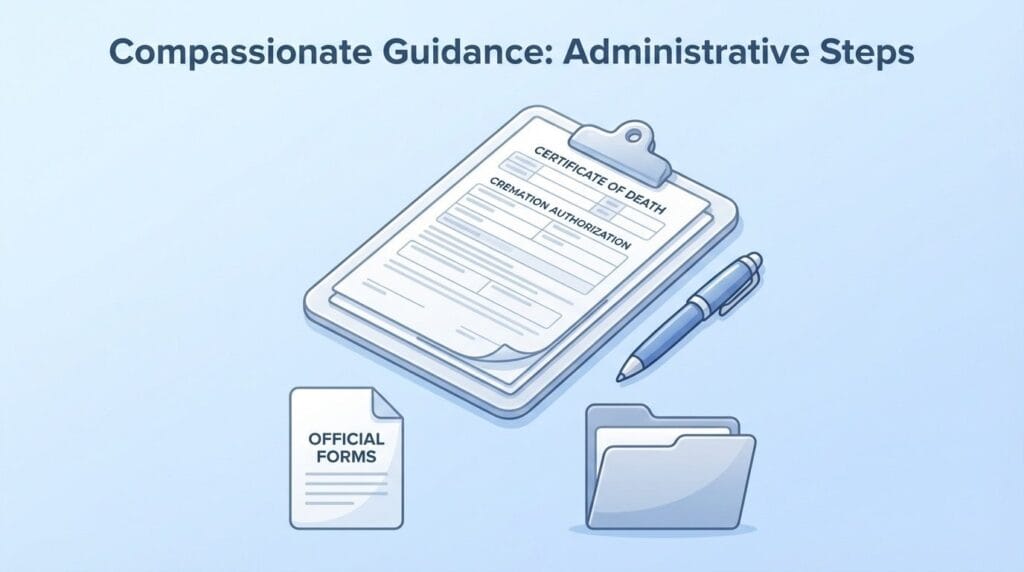
Before cremation can take place, several legal steps must be completed. These requirements exist to protect families and ensure proper identification of the deceased.
Who Can Authorize Cremation
In most states, the legal next of kin must authorize cremation. This typically follows a hierarchy: surviving spouse, adult children, parents, siblings, and other relatives.
If there’s no will or designated agent, the person highest in this order has the authority to make funeral arrangements.
This authorization is separate from healthcare decisions made during life. Even if someone held healthcare power of attorney, that authority ends at death.
Required Documents
Several documents are needed before cremation can proceed:
Death Certificate: A physician, coroner, or medical examiner must complete and sign the death certificate. This document officially records the death and its cause.
You’ll need multiple certified copies for insurance claims, estate matters, and other legal purposes. Learn more about how to obtain a death certificate in our detailed guide.
Cremation Permit: Sometimes called a “cremation authorization,” this permit is issued by local or state authorities after reviewing the death certificate. It confirms that cremation is legally permissible.
Identification Verification: The funeral home will verify the identity of both the deceased and the person authorizing cremation, typically requiring a government-issued photo ID.
Local and State Regulations
Cremation regulations vary by location. Most states require a waiting period—often 24 to 48 hours—between the time of death and cremation. This waiting period allows time for the death certificate to be properly completed and any necessary investigations to occur.
Some states require a medical examiner’s signature before cremation can proceed, particularly if the death occurred outside of a hospital or hospice setting.
Your funeral director will guide you through your state’s specific requirements. For a broader look at funeral regulations, see our article on legal requirements for burials and cremations.
Preparing Your Loved One for Cremation
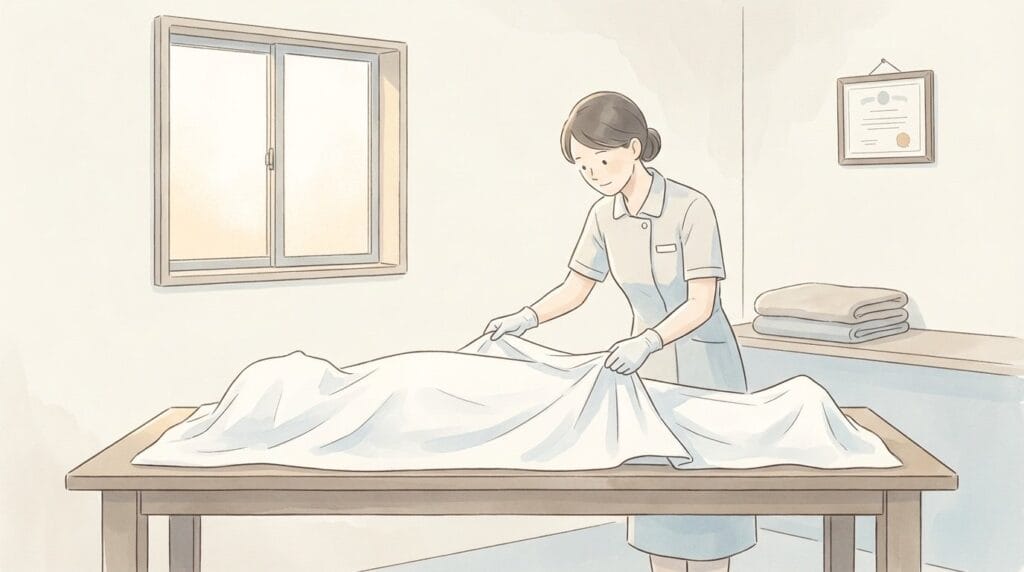
After legal requirements are met, the funeral home prepares your loved one for cremation. This process, though technical, is carried out with care and respect.
Transportation from Place of Death
The funeral home transports your loved one from the place of death whether a hospital, nursing facility, hospice, or home to their facility. This transportation is handled discreetly and professionally, typically within hours of notification.
Identification Procedures
Proper identification is taken seriously throughout the cremation process. When your loved one arrives at the funeral home, staff members verify identity using documentation and, when possible, visual identification by family members.
Before cremation, a metal identification tag with a unique number is placed with the body. This tag remains with the remains throughout the entire process, ensuring that what you receive is truly your loved one.
Body Preparation Steps
Unlike embalming for burial, cremation requires minimal body preparation. Your loved one is treated with dignity and placed in appropriate clothing or a simple covering, depending on your family’s wishes and the facility’s requirements.
Items Removed Before Cremation
Certain items must be removed before cremation for safety and practical reasons. These include:
- Pacemakers and implantable cardioverter-defibrillators (ICDs): These battery-powered devices can explode in the high heat of cremation, posing serious danger to crematory workers and equipment. The funeral director or a medical professional removes these devices before the process begins.
- Other battery-powered medical devices: Items like insulin pumps or spinal cord stimulators are also removed.
- Jewelry: While small items may remain, most funeral homes recommend removing jewelry beforehand. Precious metals will survive cremation but are often unrecognizable afterward.
- Non-combustible medical implants: Items like prosthetic joints remain after cremation and are respectfully removed from the cremated remains.
Your funeral director will discuss these details with you and can return removed jewelry to your family.
The Cremation Process Step-by-Step
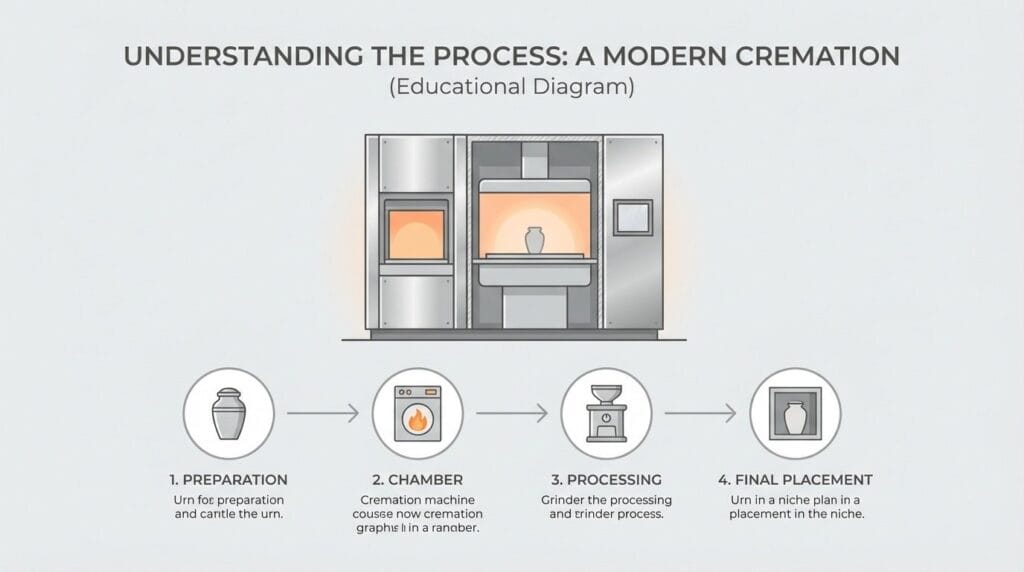
Understanding what actually happens during cremation can help ease concerns. The process is carefully controlled and monitored throughout.
Step 1 – Placement in the Cremation Chamber
Your loved one is placed in a cremation container a simple, combustible box made from materials like cardboard, plywood, or particleboard. Contrary to what some people believe, the body is cremated alone, not with multiple people at once.
The container is then placed in the cremation chamber. Modern crematories use specialized equipment designed specifically for this purpose, with computer-controlled temperature systems and environmental safety features.
What the Chamber Is
A cremation chamber, or retort, is a specialized industrial furnace lined with fire-resistant bricks. The chamber is designed to withstand extremely high temperatures and contain the process completely.
Temperature and Duration
The cremation chamber reaches temperatures between 1,400°F and 1,800°F. According to the Cremation Association of North America, the actual cremation process typically takes between 1.5 to 3 hours, depending on the body size and the crematory equipment. Larger individuals may require more time, while smaller adults or children require less.
The high temperature ensures complete reduction of organic matter, leaving only bone fragments and any non-combustible materials like surgical implants or joint replacements.
Safety and Legal Oversight
Licensed crematory operators oversee the entire process. State regulations require specific training and licensing for these professionals.
Modern crematories include safety features like automated temperature controls, emission filtration systems, and secure identification procedures to prevent any possibility of mixing remains.
Step 2 – Cooling and Processing the Remains
After cremation is complete, the chamber must cool before the remains can be removed. This cooling period usually takes one to two hours.
Once cooled, the cremated remains are carefully removed from the chamber. At this stage, the remains consist of bone fragments of various sizes, not the fine powder most people envision as “ashes.”
These bone fragments are then placed in a processor essentially a heavy-duty grinder that reduces them to a finer, more uniform consistency. This processing step is what creates the sand-like texture associated with cremated remains.
Step 3 – Understanding What “Ashes” Actually Are
The term “ashes” is somewhat misleading. Cremated remains aren’t ashes from burning they’re pulverized bone fragments.
Composition
Cremated remains consist primarily of bone mineral, mainly calcium phosphate and other minerals that don’t burn away. Organic matter the soft tissues, organs, and fluids is consumed during cremation, but the inorganic structure of bone remains.
Weight Ranges
According to industry sources, adult cremated remains typically weigh between 4 and 8 pounds, most often around 5 pounds. Interestingly, height correlates with ash weight more closely than body weight does, since skeletal size determines how much bone material remains.
For children and infants, cremated remains weigh considerably less, often 2 to 4 pounds or less.
Factors Affecting Appearance
Cremated remains are usually light gray to white in color, with a sandy or grainy texture. Color variations can occur based on several factors:
- Body composition (higher adipose tissue can create darker coloring)
- Medications or medical treatments the person received
- The specific crematory equipment used
- Bone density and structure
These variations are normal and don’t indicate any problem with the cremation process.
Step 4 – Transferring Ashes to an Urn or Temporary Container
After processing, the cremated remains are placed in a container. If you’ve selected an urn in advance, the funeral home will transfer the remains directly into it.
Otherwise, they’ll be placed in a temporary container typically a simple plastic box or heavy-duty plastic bag inside a cardboard or plastic urn.
The metal identification tag that accompanied your loved one throughout the process is verified one final time before the cremated remains are sealed and prepared for return to your family.
Most funeral homes can accommodate special requests, such as dividing the remains among family members or filling memorial jewelry. These services are often included in cremation packages, though it’s wise to ask beforehand.
After the Cremation: What Families Can Do Next

Receiving your loved one’s cremated remains is an emotional moment. What comes next is deeply personal, and there’s no single “right” way to proceed.
Choosing an Urn or Keepsake
An urn is a container designed to hold cremated remains. They come in countless styles, materials, and price points.
Types of Urns
- Traditional urns: Often made from wood, metal, or ceramic, these are designed for permanent display or burial
- Biodegradable urns: Made from materials like salt, sand, or paper, these are designed to break down naturally if buried or placed in water
- Keepsake urns: Smaller containers that hold a portion of cremated remains, allowing multiple family members to each keep some
- Jewelry urns: Pendants, bracelets, or rings with small compartments for a tiny amount of cremated remains
Materials and Symbolism
Urns are crafted from virtually any material: marble, bronze, wood, ceramic, glass, or biodegradable substances.
Some families choose materials that reflect their loved one’s personality a wooden urn for someone who loved nature, a sleek metal design for someone with modern tastes, or a handcrafted ceramic piece for an artist.
Scattering Ashes Legally and Respectfully
Many families choose to scatter cremated remains in a meaningful location. This option allows for a personal, often beautiful final tribute.
Legal Considerations
Scattering laws vary significantly by state and location type. Generally:
- Private property: You’ll need the property owner’s permission
- Public lands: Federal lands like national parks often allow scattering but may require permits
- Waterways: The EPA requires scattering at sea to occur at least three nautical miles from shore
- State and local parks: Rules vary widely
For detailed information about your state’s requirements, see our guide to scattering ashes laws by state.
Popular Scattering Locations
Families often choose locations that held special meaning: a favorite hiking trail, a beloved beach, a family property, or a garden. Some choose aerial scattering from aircraft or scattering at sea.
Alternatives for Families
If scattering doesn’t feel right, other options include:
- Burying the urn in a cemetery plot or family property
- Placing the urn in a columbarium niche
- Keeping the urn at home
- Dividing the remains among family members
- Incorporating cremated remains into memorial objects like glass art, reef structures, or even vinyl records
Memorial Services After Cremation
Cremation offers flexibility in timing and style for memorial services.
How Memorials Differ from Funerals
Traditional funerals typically occur within days of death and often include a viewing of the body. Memorial services after cremation can happen weeks or even months later, giving families time to plan and allowing distant relatives to attend.
Timing Flexibility
Because you’re not working against the biological clock of body decomposition, you can schedule a memorial service when it works best for your family.
Some people hold services in warmer months for outdoor gatherings, or wait until holidays when family naturally gathers.
Ways to Personalize
With the cremated remains present in an urn, memorial services can take many forms:
- Traditional religious services in a house of worship
- Celebration of life gatherings at meaningful locations
- Small, intimate family gatherings
- Scattering ceremonies
- Memorial services combined with ash scattering
For ideas about different types of memorial services, explore our articles on memorial services vs celebration of life and memorialization ideas.
Costs Associated With Cremation
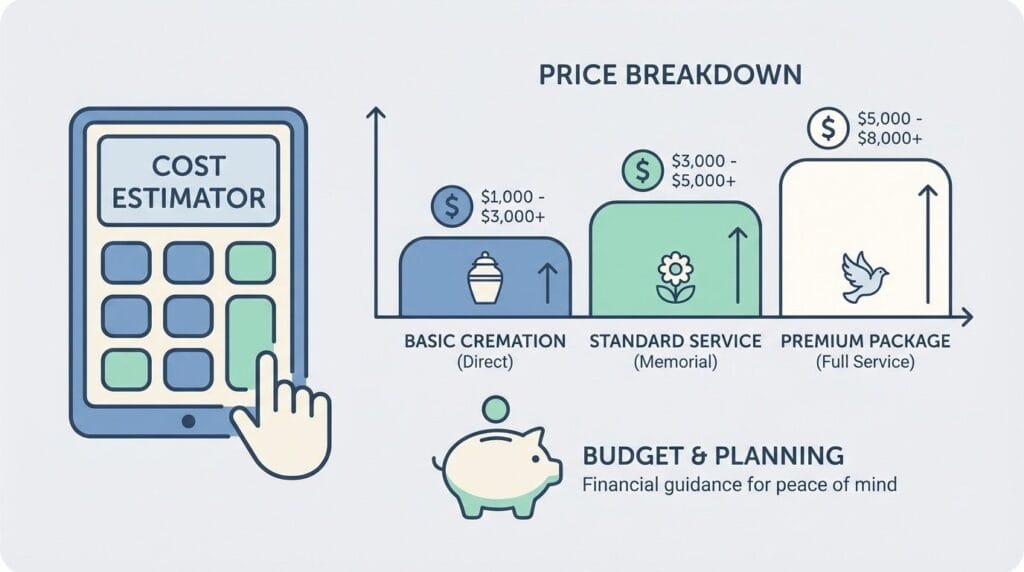
Understanding cremation costs helps you plan and make informed decisions. Prices vary based on location, services selected, and the funeral home you choose.
Average Cremation Cost Ranges
According to the National Funeral Directors Association, the median cost of a funeral with cremation was $6,280 in 2023. This figure includes professional services, transportation, the cremation itself, and a basic urn.
However, costs can range from as low as $700 for the most basic direct cremation to $5,000 or more depending on your location and choices.
Direct Cremation vs Full-Service Cremation
Direct Cremation: This is the most affordable option, typically costing between $700 and $3,000. Direct cremation includes:
- Transportation of the deceased
- Basic professional services
- Refrigeration until cremation
- The cremation process itself
- A temporary container for the remains
Direct cremation doesn’t include a viewing, ceremony, embalming, or use of the funeral home’s facilities. For families who plan to hold a memorial service separately or prefer simplicity, this option works well. Learn more in our comparison of direct cremation vs traditional service.
Full-Service Cremation: This option includes a traditional funeral service before cremation and typically costs $4,000 to $7,000 or more. It includes:
- Viewing or visitation
- Funeral ceremony at the funeral home or other location
- Transportation
- Embalming (if desired)
- Use of facilities and staff
- Cremation
- Basic urn
Optional Add-Ons Affecting Pricing
Several optional services can increase costs:
- Upgraded urns: Basic urns are included in most packages, but decorative or specialty urns can cost $100 to $1,000 or more
- Memorial products: Items like memorial cards, guest books, and video tributes
- Obituary placement: Some funeral homes charge for placing obituaries in newspapers
- Additional death certificates: While a few copies are typically included, additional certified copies cost $10 to $30 each
- Cremation jewelry or keepsakes: These typically range from $50 to $500
- Witness cremation: Some crematories allow family members to be present during the placement of the deceased in the chamber, sometimes for an additional fee
Tips to Avoid Unexpected Charges
Request an itemized price list from any funeral home you’re considering. Federal law requires funeral homes to provide this information. Ask specific questions about what’s included in quoted packages and what costs extra.
Don’t feel pressured to make immediate decisions about upgrades or add-ons. You can purchase urns, memorial jewelry, and other items from third-party vendors, often at lower prices.
For a comprehensive look at all funeral expenses, read our funeral costs guide.
Cultural and Religious Considerations
Religious and cultural beliefs shape how different communities view cremation. Understanding these perspectives helps families honor their traditions while making decisions that feel right.
Overview of How Major Religions View Cremation
Religious views on cremation vary widely:
Christianity: Most Christian denominations now accept cremation. The Roman Catholic Church lifted its ban on cremation in 1963, though it prefers that cremated remains be buried or entombed rather than scattered. Protestant denominations generally accept cremation as a personal choice.
Islam: According to Islamic tradition, cremation is strictly forbidden. Muslims believe the body must be treated with dignity in both life and death, and cremation is seen as disrespectful to the body, which belongs to Allah. Islamic funeral practices require burial, typically within 24 hours of death.
Judaism: Orthodox and Conservative Judaism traditionally prohibit cremation, viewing it as inconsistent with Jewish teachings about respecting the body and belief in resurrection. Reform and Reconstructionist Judaism are more accepting of cremation, though burial remains the preferred option in most Jewish communities.
Hinduism and Buddhism: Both traditions embrace cremation. For Hindus, cremation is a sacred act that releases the soul from the physical body. Buddhist beliefs about impermanence align well with cremation, though practices vary among different Buddhist traditions.
Eastern Orthodox Christianity: The Eastern Orthodox Church generally prohibits cremation, teaching that it conflicts with belief in bodily resurrection and the sanctity of the human body as God’s creation.
When Cremation May Not Be Permitted
Beyond religious prohibitions, certain circumstances prevent or delay cremation:
- Active criminal investigations
- Missing required documentation
- Disputes among family members about final arrangements
- Medical examiner holds pending autopsy results
How Cultural Customs Shape Post-Cremation Rituals
Different cultures have unique customs for handling cremated remains. Some Hindu families scatter ashes in sacred rivers.
Some Buddhist families may keep remains at home for a period before final disposition. Japanese tradition often involves family members using chopsticks to transfer bone fragments to an urn after cremation.
Understanding and honoring these traditions brings comfort to grieving families. For more information about how different faiths approach end-of-life rituals, see our guide to religious funeral customs.
When Cremation May Not Be Possible
While cremation is widely available, certain situations require special handling or make cremation temporarily or permanently impossible.
Medical and Legal Restrictions
If a death falls under the jurisdiction of a medical examiner or coroner such as unexpected deaths, accidents, suicides, homicides, or deaths without recent physician care cremation will be delayed until the investigation is complete.
The medical examiner must sign the death certificate and cremation authorization before the process can proceed.
In cases where an autopsy is required, this typically adds only a few days to the timeline. The autopsy is completed, the body is released, and cremation can proceed.
The investigation of cause of death may continue for weeks or months, but this doesn’t prevent cremation from happening.
Religious Prohibitions
As discussed earlier, Islam and Orthodox Judaism strictly prohibit cremation. If you’re part of a faith community that forbids cremation, it’s important to discuss this with family members and include your wishes in your advance directives or will.
Cases Requiring Special Authorization
Some situations need additional permissions:
- Deaths involving organ or tissue donation (cremation occurs after donation is complete)
- Deaths of non-residents (additional documentation may be required)
- Deaths involving certain infectious diseases (special handling procedures apply)
Your funeral director will guide you through any special requirements that apply to your situation.
How to Choose the Right Funeral Home or Crematory

Selecting a funeral home or crematory is an important decision. The right provider will guide you with compassion, transparency, and professionalism.
What to Ask
When considering funeral homes, ask:
- “Is your crematory on-site, or do you use a third-party facility?” (On-site crematories allow for more direct oversight)
- “What is included in your basic cremation package?”
- “Can family members witness the cremation if they wish?”
- “How do you ensure proper identification throughout the process?”
- “What is your timeline from taking custody of the deceased to returning cremated remains?”
- “Are your staff members licensed and trained in cremation procedures?”
- “Do you offer assistance with death certificates, permits, and other paperwork?”
Don’t hesitate to ask questions about anything you don’t understand. Reputable funeral directors expect questions and welcome the opportunity to provide clear answers.
What to Expect
Professional funeral homes will:
- Provide clear, itemized pricing without pressure
- Explain all options and respect your choices
- Handle all necessary paperwork and legal requirements
- Communicate clearly about timelines
- Treat your loved one with dignity and respect
- Be available to answer your questions
Licensing and Facility Standards
Crematories must be licensed by state authorities and comply with environmental and safety regulations. Staff members operating cremation equipment must complete specialized training and maintain proper credentials.
When visiting a funeral home, trust your instincts. The space should be clean, well-maintained, and professionally managed. Staff should be compassionate, patient, and willing to explain their processes.
For help evaluating your options, read our guides on how to choose the right funeral home and questions to ask funeral homes.
Compassionate Tips for Families Navigating Cremation

Making decisions about cremation while grieving is difficult. Here are some gentle suggestions to help you move through this time.
Managing Emotions
Your emotions during this time may feel unpredictable. You might feel relief, sadness, numbness, anger, or a confusing mix of all these feelings at once. All of this is normal.
Give yourself permission to feel whatever comes up. Grief doesn’t follow a predictable path, and making practical decisions while emotionally overwhelmed is genuinely hard work.
If you’re feeling paralyzed by choices, it’s okay to ask the funeral director, “What do most families do?” This isn’t about following the crowd it’s about giving yourself a starting point when your decision-making capacity is depleted by grief.
What to Discuss with Others
If you’re the primary decision-maker, consider consulting other family members, especially if they’ll have strong opinions later. Brief conversations now can prevent conflicts or regrets down the line.
That said, you don’t need unanimous agreement from everyone who has an opinion. If your loved one expressed clear wishes, honoring those wishes is more important than making everyone happy.
How to Support Family Members
If you’re not the primary decision-maker but want to help:
- Offer specific support rather than asking “What can I do?” (Try: “I’d like to pick up the death certificates from the funeral home. Would that be helpful?”)
- Respect the primary decision-maker’s choices, even if you would have chosen differently
- Be present and listen without trying to fix everything
- Help with practical tasks like notifying extended family, organizing a meal schedule, or handling phone calls
For more support, visit our grief guide for resources on coping after loss.
FAQs About the Cremation Process
How long does the cremation process take?
The actual cremation takes 1.5 to 3 hours depending on body size and crematory equipment. The entire process from the time the funeral home takes custody of your loved one to when you receive the cremated remains typically takes 3 to 10 business days, depending on how quickly paperwork is processed and scheduled cremations.
Is the body cremated with the casket?
No. Bodies are cremated in a simple cremation container made from combustible materials like cardboard or light wood. Traditional caskets, which are expensive and made from materials that don’t burn cleanly, are not used for cremation. However, some families rent a ceremonial casket for a viewing or funeral service before cremation, then transfer the body to a cremation container afterward.
Are all cremations done the same way?
While the basic process is the same, crematory equipment and procedures can vary slightly between facilities. Some crematories use more modern equipment with advanced temperature controls and emissions systems. Some facilities allow family members to witness the placement of their loved one in the chamber, while others do not offer this option. The fundamental outcome reduction of the body to bone fragments remains consistent.
How soon can cremation happen after death?
Most states require a waiting period of 24 to 48 hours between death and cremation. This allows time for the death certificate to be completed, reviewed, and signed, and for any necessary permits to be obtained. If a medical examiner is involved, cremation may be delayed several additional days pending investigation or autopsy.
How do families know they receive the correct ashes?
Crematories use strict identification procedures. A unique metal identification tag is placed with your loved one when they arrive at the funeral home. This tag stays with them throughout the entire process, including through the cremation itself (as it won’t burn). The tag number is verified at multiple points and matched to the paperwork when the cremated remains are transferred to an urn or container. Reputable facilities never perform more than one cremation at a time in a chamber, preventing any possibility of mixing remains.
