



When a loved one passes away, families face difficult emotional moments alongside practical decisions about funeral arrangements.
One question that often creates stress and confusion is: why do funeral prices vary so much? Understanding the factors that influence funeral costs can help you make informed decisions during a challenging time.
The median cost of a funeral with viewing and burial reached $8,300 in 2023, according to the National Funeral Directors Association.
This represents a 5.8% increase from 2021. For cremation services with viewing, the median cost was $6,280, showing an 8.1% increase over the same period.
These numbers tell only part of the story. Behind every price tag lie multiple variables that affect what families ultimately pay.
This article explains the key factors that drive funeral pricing. You will learn why costs differ between funeral homes, which service choices affect your total bill, and how location, materials, and legal requirements play a role.
Understanding Why Funeral Prices Vary
Funeral pricing is not one size fits all. Unlike many consumer purchases where products and services are standardized, funeral arrangements involve dozens of individual decisions. Each choice you make triggers a cascade of cost factors.
The FTC Funeral Rule requires funeral homes to provide itemized General Price Lists, allowing consumers to see exactly what services and products cost.
This transparency reveals a truth that surprises many families: funeral expenses come from multiple sources, not just the funeral home itself. Some costs are set by the funeral home.
Others come from third parties like cemeteries, crematoriums, government agencies, and merchandise suppliers.
The price variability stems from several realities. Funeral homes operate as independent businesses with different overhead costs, staffing models, and facility types.
Geographic location matters immensely. Competition levels in your area affect pricing. The type of service you choose creates a foundational cost difference. Then, layer by layer, your choices about preparation, merchandise, facilities, timing, and documentation add to the total.
Transparency helps, but understanding what drives costs empowers you to make choices aligned with both your wishes and your budget. Let’s examine each factor in detail.
For a comprehensive overview of funeral expenses, visit Funeral Costs Explained.
Location and Funeral Home Competition
Where you live significantly impacts what you pay for funeral services. The same funeral package can cost thousands of dollars more in one state or city compared to another.
Urban vs Rural Pricing Differences
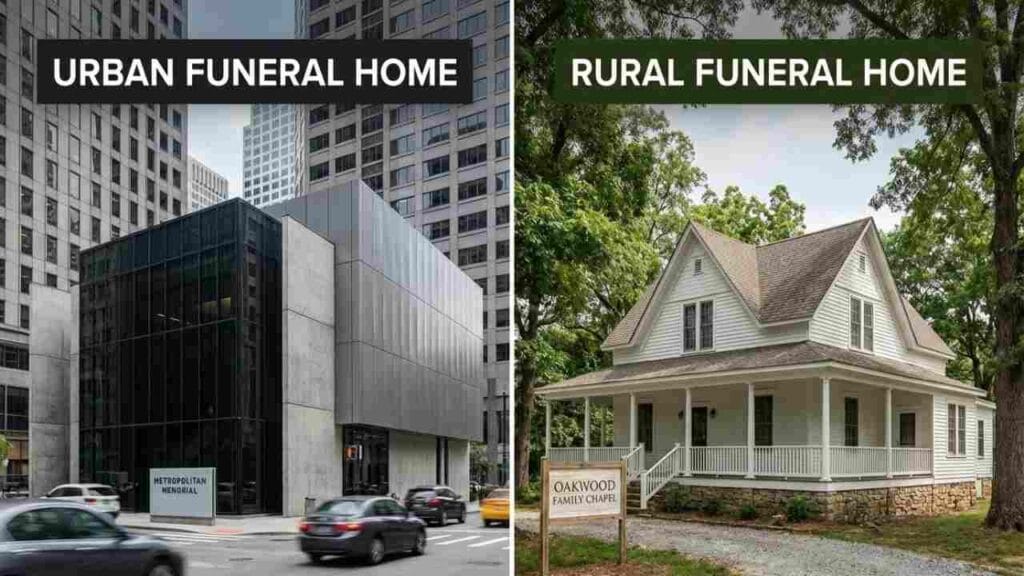
Urban funeral homes typically charge more than their rural counterparts. This price gap reflects higher operating costs in cities. Commercial real estate in metropolitan areas carries premium prices. Funeral homes in urban centers pay more for property, which translates into higher overhead that gets passed to consumers.
Cremation costs tend to be lower in rural areas compared to urban centers, according to industry pricing analysis. The same pattern holds for burial services. A traditional funeral with burial might cost $9,000 in a major city but $6,500 in a small town for comparable services.
Urban funeral homes also face higher labor costs. City workers generally earn more than rural workers across all industries, and funeral service professionals are no exception.
Additionally, urban funeral homes often maintain larger facilities with more viewing rooms, chapel space, and parking to serve higher population density, driving up maintenance and utility costs.
Supply and Demand Among Local Funeral Homes
The number of funeral homes in your area affects pricing through basic market forces. Areas with many funeral homes competing for business tend to have lower prices than areas with few options.
In competitive markets, funeral homes must price services attractively to win business. They may offer more package deals, discount certain services, or keep profit margins lower. In markets with limited competition, funeral homes have more pricing power.
According to Consumer Reports research on California funeral homes, prices for the same services varied by hundreds or even thousands of dollars within the same geographic region. This variation often correlates with the density of funeral service providers in that area.
Why Facilities in Some States Charge More
State regulations create another layer of pricing variation. Some states impose stricter licensing requirements, inspection standards, and operational rules that increase compliance costs for funeral homes. These costs get reflected in service prices.
States with higher costs of living naturally see higher funeral prices across the board. Beyond general cost of living, specific state laws about funeral practices affect prices.
Some states require certain procedures or documentation that others do not, creating regional price differences for similar services.
To find funeral homes in your area and compare their services, use our directory: Funeral Homes Near You.
Type of Funeral Service Chosen
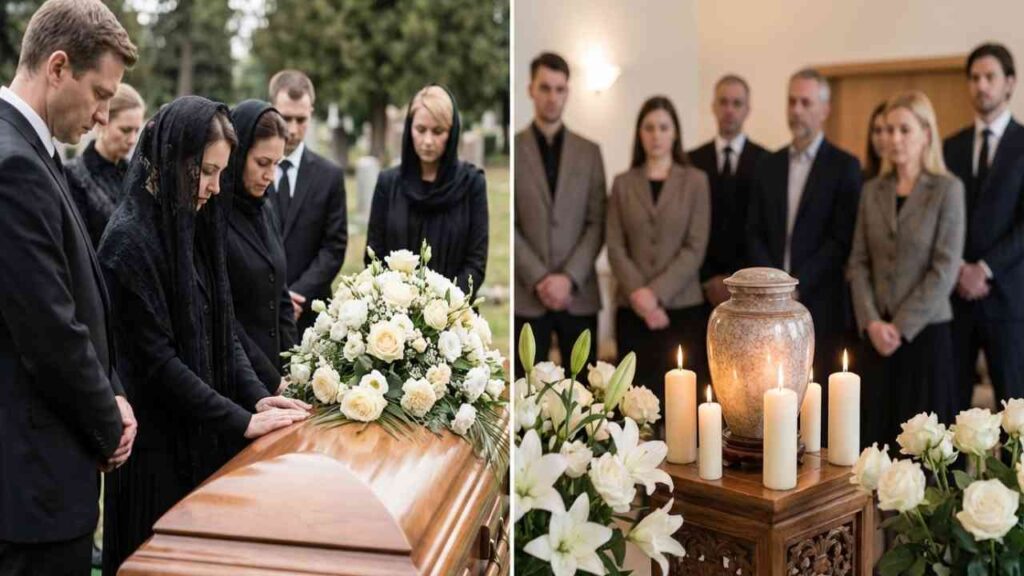
The single biggest factor affecting funeral costs is which type of service you choose. This fundamental decision creates a baseline from which all other costs build.
Cremation vs Burial as Cost Drivers
Cremation and burial represent two different pathways, each with distinct cost structures. Burial requires a casket, cemetery plot, grave opening and closing, and often a burial vault or grave liner. Cremation requires a cremation container, crematory fees, and typically an urn.
According to the NFDA’s 2025 Cremation & Burial Report, the cremation rate in the United States is projected to reach 63.4%, while burial accounts for 31.6%. This shift partly reflects cost considerations, as cremation generally costs less than burial.
A traditional burial funeral typically ranges from $7,000 to $12,000, while cremation costs range from $2,000 to $7,200.
The gap comes primarily from burial-specific expenses like the cemetery plot (which can cost $1,000 to $4,000 or more), opening and closing the grave ($1,000 to $2,000), and burial vaults required by many cemeteries ($1,000 to $3,000).
Direct Cremation vs Full Traditional Service
Within cremation, the choice between direct cremation and a full service with viewing dramatically affects price. Direct cremation, where the body is cremated shortly after death without embalming or viewing, represents the most affordable option, typically ranging from $1,000 to $3,000.
A cremation with viewing and memorial service costs more because it includes embalming, facility use for visitation, staff services for ceremonies, and often a rental casket for the viewing. This service style typically costs $6,000 to $7,000.
The price difference reflects the labor, facility usage, preparation work, and time involved in hosting a traditional service versus processing a direct cremation.
Memorial vs Celebration of Life Pricing Differences
Memorial services held after cremation or burial can vary widely in cost depending on where and how they are conducted. A memorial service at a funeral home chapel incurs facility fees ($400 to $800), staff charges, and equipment rental.
The same memorial held at a church, community center, or private home eliminates facility fees, though you may still hire funeral home staff for coordination.
Celebration of life events can be as simple or elaborate as families wish, creating corresponding cost variations. Some families spend hundreds on a simple gathering, while others invest thousands in elaborate venues, catering, and multimedia presentations.
Learn more about cost differences: Funeral Costs vs Cremation Costs: Which Is More Affordable?
Caskets, Urns, and Merchandise Choices

Funeral merchandise represents a substantial portion of total funeral costs. The casket alone often stands as the single most expensive item families purchase.
Material and Craftsmanship Affect Pricing
Caskets range from $2,000 to $10,000 or more, depending on materials and craftsmanship. Basic models use pressed wood or cloth-covered materials.
Mid-range caskets feature solid wood like pine, oak, or cherry. High-end caskets use premium hardwoods, solid bronze, or stainless steel with elaborate interiors.
According to FTC regulations, funeral homes must allow families to purchase caskets from third-party retailers. Some families save money by buying caskets online, where prices can be 20% to 50% lower than funeral home pricing.
The FTC Funeral Rule prohibits funeral homes from charging handling fees when you bring your own casket.
Metal caskets come in different gauges, with lower numbers indicating thicker, more durable metal that costs more. An 18-gauge steel casket costs significantly more than a 20-gauge model. Bronze and copper caskets represent the highest-end metal options.
Eco-Friendly Burial Products
Green burial options have gained popularity, offering alternatives to traditional caskets and burial practices. Eco-friendly caskets made from bamboo, wicker, cardboard, or biodegradable materials typically cost less than traditional caskets, ranging from $500 to $3,000.
Green burials eliminate embalming, concrete vaults, and non-biodegradable materials, reducing overall costs while aligning with environmental values. However, not all cemeteries allow green burial practices, which can limit options in some areas.
Cost Differences in Urns
Urns cost considerably less than caskets, typically ranging from $70 to $2,250. Basic urns cost $100 to $300, while decorative or artistic urns can reach several thousand dollars.
Materials vary from simple plastic or metal to hand-carved wood, ceramic, glass, or even biodegradable materials.
Some families choose keepsake urns for multiple family members, each holding a small portion of ashes. Others select burial vaults for urns if interring in a cemetery. Specialty urns designed for scattering, water burial, or specific memorial uses offer different price points.
For a detailed breakdown of what you pay for: Funeral Cost Breakdown: Understanding What You’re Paying For
Body Preparation and Professional Services

The care and preparation of remains involves professional services that carry specific costs based on what is required and chosen.
Embalming Requirements and Costs
Embalming typically costs $500 to $1,000. No state law requires routine embalming for every death, according to the FTC Funeral Rule.
Some states require embalming or refrigeration if the body will be held for more than 24 hours without other preservation. Most require embalming if transporting remains across state lines or internationally.
Embalming becomes necessary when families want a public viewing or visitation. Without embalming, viewings must occur within a short timeframe and under specific conditions.
Funeral homes cannot require you to pay for embalming unless it is legally required or necessary for the service you chose.
Direct cremation and immediate burial eliminate embalming needs, creating immediate cost savings. However, families who want time to gather from distant locations or who wish for traditional visitation typically choose embalming despite the added cost.
Cosmetic Services and Dressing
Preparing the body for viewing involves more than embalming. Cosmetic services, hairdressing, and dressing the deceased typically cost $50 to $500, sometimes included in service fees, sometimes itemized separately.
These services require skilled professionals and can take several hours. The condition of the body, the type of cosmetic work needed, and family preferences all affect the time and expertise required.
Refrigeration, Storage, and Timing
Funeral homes charge storage fees if keeping remains beyond a basic period. Refrigeration costs typically run $35 to $100 per day. Some funeral homes include a few days in their basic service fee, then charge daily for additional time.
Timing matters for storage costs. If family members need time to travel or if you are coordinating with a cemetery that has limited availability, storage fees can add up. Direct cremation within 24 to 48 hours eliminates these ongoing charges.
Staff, Facilities, and Labor Involved
The human element of funeral service carries significant costs that families sometimes overlook when evaluating prices.
Facility Usage (Viewing Rooms, Chapels, Equipment)
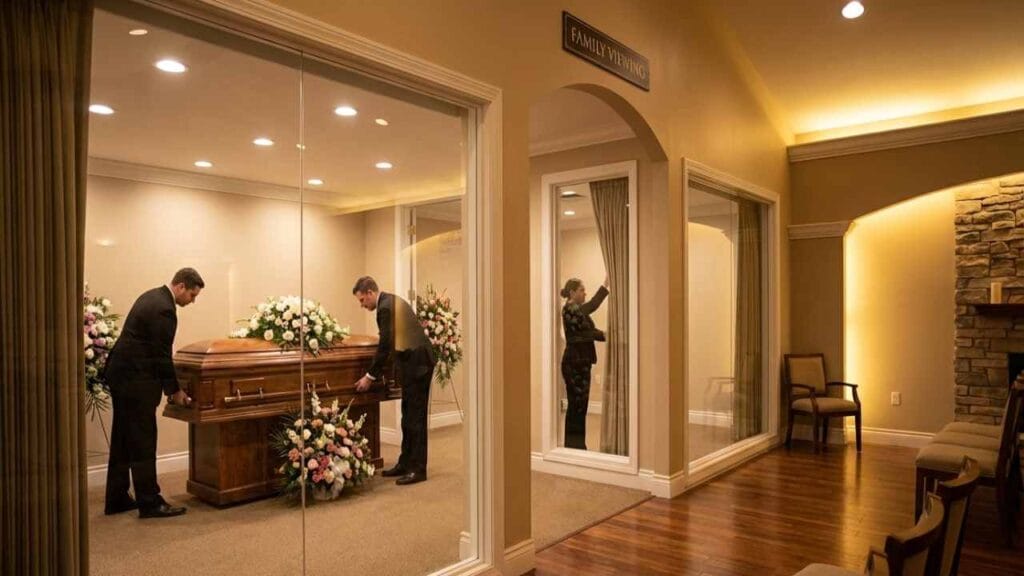
Funeral home facilities represent major capital investments that influence pricing. Viewing rooms typically cost $300 to $600 per day to use. Chapel or ceremony space runs $400 to $800 per event. These fees cover the physical space, utilities, setup, and cleanup.
Larger, newer facilities with upscale amenities charge premium prices compared to older, smaller funeral homes. Climate control, sound systems, video equipment, comfortable seating, and ample parking all factor into facility costs.
Families choosing direct cremation or immediate burial skip facility usage fees entirely. Those wanting simple graveside services eliminate chapel fees. Understanding which facilities you actually need helps control costs.
Staffing Levels and Overtime Charges
Funeral directors and staff must be present for all services, coordination activities, and body care. The basic service fee, which funeral homes charge for all arrangements, covers director services and overhead. This fee typically ranges from $1,500 to $3,000.
Additional staff costs arise when services require multiple staff members or occur outside regular business hours.
A large funeral with procession might need three or four staff members. A graveside service requires staff transportation and attendance. Each adds labor costs.
Professional staff handle countless details families never see: coordinating with cemeteries, filing paperwork, liaising with clergy, arranging flowers, preparing obituaries, managing guest books, and directing processions. These services require trained professionals whose time and expertise command fair compensation.
Weekend or Holiday Pricing Variations
Many funeral homes charge premium rates for services on weekends or holidays. Weekend surcharges typically range from $300 to $600. Holiday services can add $500 to $1,000 to your bill.
These premiums reflect overtime pay for staff working outside normal business hours. Some funeral homes build weekend availability into their standard pricing. Others clearly itemize weekend or holiday fees.
When reviewing pricing, ask whether quotes include potential weekend or holiday charges if your service timing is uncertain.
Filing death certificates and other permits on weekends may also carry county surcharges of $50 to $150 beyond funeral home fees.
Permits, Documentation, and Legal Requirements
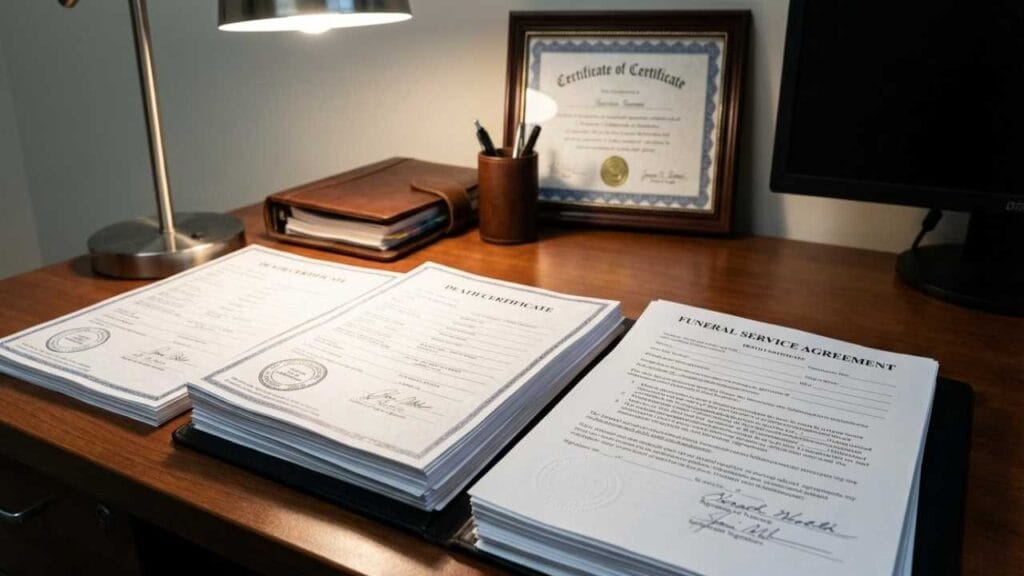
Every funeral requires legal documentation, creating costs that vary by jurisdiction.
Death Certificates
Death certificates cost $10 to $30 per copy depending on your state. Most families need multiple copies for insurance claims, bank accounts, property transfers, and government benefits. Ordering 10 to 15 copies at the time of death costs less than requesting additional copies later.
Funeral homes typically handle death certificate filing as part of their basic service fee. However, they may charge a processing fee ($50 to $150) for this administrative work beyond the government fee for the certificates themselves.
Cemetery Permits
If burial is chosen, cemetery permits and fees come into play. Opening and closing the grave costs $1,000 to $2,000. Cemetery administrative fees add another $100 to $300. Weekend or holiday burials may carry surcharges.
Cemeteries require payment before burial. These are cash advance items that funeral homes typically collect and pay on your behalf, sometimes adding a service charge of 10% to 20% to cover their administrative costs.
Cremation Authorization Fees
Cremation requires special permits in all states. Medical examiner or coroner authorization may be needed. Cremation permit fees range from $50 to $150 depending on location.
Some states require a waiting period of 24 to 48 hours before cremation, which can affect storage costs. Each jurisdiction has specific documentation requirements that funeral homes must navigate, adding administrative complexity and cost.
For details on legal requirements: Legal Requirements for Burials and Cremations
Transportation and Logistics
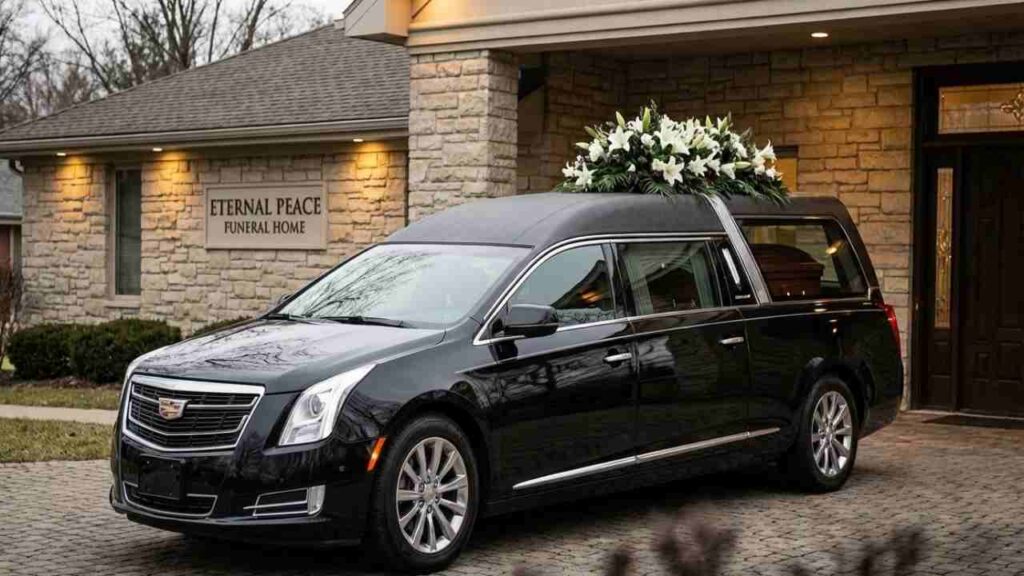
Moving remains from place of death to funeral home, and then to cemetery or crematory, involves logistics that affect costs.
Hearse and Vehicle Fees
Hearse rental for funeral procession typically costs $300 to $500. This fee covers the vehicle, fuel, insurance, and driver. Some funeral homes include one local hearse trip in their service packages. Others charge separately for each vehicle use.
If the deceased died in a hospital or facility far from the funeral home, initial transport fees apply. Local transfers within 25 miles typically cost $200 to $300. Longer distances incur higher fees.
Distance-Based Costs
Transportation costs rise with distance. Moving remains between cities or states can cost $500 to $1,500 or more depending on mileage. If air transportation is required for repatriation to another state or country, costs can reach $2,000 to $10,000.
Some families choose funeral homes near the place of death to minimize transportation costs, then hold memorial services in their hometown. This approach can reduce overall expenses compared to transporting remains long distances.
Additional Staff for Transfers
Body transfers require at least two staff members in many cases. Each staff person’s time is billed hourly or included in transfer fees. After-hours transfers (evenings, nights, weekends) may carry premium rates reflecting overtime pay for staff.
Optional Add-Ons That Increase Funeral Prices
Beyond core services and requirements, families often choose optional elements that personalize services and add to costs.
Flowers, Programs, and Multimedia Tributes
Floral arrangements from funeral homes typically cost $100 to $500 per arrangement. Many families purchase flowers directly from florists for better pricing. Funeral programs printing costs $50 to $200 depending on quantity and quality.
Multimedia tribute videos have become popular, with production fees ranging from $100 to $500. Some funeral homes offer this service, while others work with outside vendors. Guest books, memorial cards, and prayer cards add $50 to $200.
Catering or Venue Upgrade Options
If holding a reception at the funeral home, catering costs range widely from $10 to $50 per person depending on meal type and quality. Many families save money by hosting receptions at home or community spaces with potluck contributions.
Upgrading to premium viewing rooms or larger chapel spaces may carry additional fees of $200 to $500. These upgrades make sense for large gatherings but are unnecessary for intimate services.
Optional Rituals or Cultural Requirements
Specific cultural or religious practices may require particular items or services. For example, Jewish funerals traditionally use plain wood caskets.
Some traditions require washing rituals or special shrouds. Catholic funerals might include mass fees. These requirements vary widely and can add $100 to $1,000 depending on complexity.
Understanding which elements are essential to your traditions versus optional helps you allocate budget appropriately.
Be aware of unexpected charges: Hidden Funeral Fees You Should Watch Out For
Seasonal and Timing Factors
When you hold a funeral can affect costs in ways families do not always anticipate.
Holiday Surcharges
Major holidays like Thanksgiving, Christmas, New Year’s, and Easter often trigger surcharges of $400 to $1,000. These fees reflect higher labor costs for staff working holidays and reduced availability of services.
Some cemeteries close entirely on major holidays, forcing delays that may incur additional storage fees.
Peak Season Demand in Certain Regions
In some regions, particularly areas with extreme winter weather, cemetery burials peak in spring and summer. High demand periods may command premium pricing or face scheduling delays.
Cremation provides more flexibility since it is not weather-dependent, making it attractive in northern climates with harsh winters where ground is frozen for months.
Weather-Related Costs in Specific States
Winter burials in northern states may require special equipment to dig graves in frozen ground, adding $200 to $500 to cemetery costs. Some cemeteries use heated blankets or tents for comfort during cold-weather services, which may carry extra fees.
Hurricane-prone areas may face service delays during severe weather seasons. Desert regions might charge premium rates for summer services that require extensive cooling of facilities and remains.
How Funeral Packages Influence Price Variation
Many funeral homes offer bundled service packages alongside itemized pricing.
Understanding Packages vs Itemized Pricing
Packages bundle commonly chosen services at a set price, often offering convenience and slight savings compared to selecting each item individually. A typical traditional package might include basic services, embalming, viewing, chapel ceremony, hearse, and service folder for one total price.
The FTC Funeral Rule requires funeral homes to provide itemized pricing even when offering packages. You can mix and match services rather than accepting a package. Comparing package prices to itemized costs helps identify real savings versus convenience bundling.
Why Packages Vary Dramatically
Package prices vary based on which services and merchandise are included. One funeral home’s “basic package” might include items another charges separately. Some packages include specific casket price ranges; exceeding that range adds costs.
Package quality differs too. A $4,000 package at one funeral home might include more services or better merchandise than a $4,000 package elsewhere. Reading what each package includes is essential for meaningful comparison.
Value vs Convenience
Packages offer convenience for families who want simpler decision-making during stressful times. However, itemizing services gives you control to eliminate items you do not need. Families wanting very simple or very customized services often benefit from itemized selection.
Learn more about bundled services: Understanding Funeral Packages: Are They Worth It?
When to Expect Higher or Lower Funeral Costs
Certain factors reliably predict whether you will face higher or lower funeral expenses.
Expect higher costs when:
| Factor | Impact on Cost |
|---|---|
| Urban location | Premium pricing due to higher real estate and labor costs |
| Traditional burial with viewing | Casket, cemetery plot, burial vault, embalming add thousands |
| Weekend or holiday services | Overtime premiums of $300 to $1,000 |
| Premium casket or urn | High-end merchandise can add $5,000 to $10,000 |
| Elaborate personalization | Custom elements, catering, multimedia can add $1,000+ |
| Limited local competition | Fewer funeral homes mean less pricing pressure |
Expect lower costs when:
| Factor | Impact on Cost |
|---|---|
| Rural location | Lower overhead translates to lower pricing |
| Direct cremation | Minimal services eliminate most fees |
| Midweek services | Standard rates without overtime premiums |
| Basic merchandise | Simple caskets or urns save thousands |
| Home or community venue | Eliminates facility rental fees |
| High competition area | Multiple providers compete on price |
Understanding these patterns helps set realistic expectations and identify opportunities for cost management.
Next Steps: How to Use Price Factors When Planning a Funeral
Armed with knowledge of what affects funeral prices, you can approach planning with confidence.
Start by determining which type of service aligns with your values and budget: burial or cremation, traditional or simple. This single decision sets your baseline cost.
Next, prioritize what matters most to you. Some families deeply value certain elements like specific religious rituals, gathering space for large communities, or particular merchandise.
Others prioritize simplicity and cost minimization. Neither approach is wrong; clarity about priorities guides spending.
Request itemized General Price Lists from multiple funeral homes. Compare their basic service fees, facility charges, merchandise pricing, and optional services. Ask about packages but ensure you see itemized breakdowns too.
Ask specific questions about the factors discussed in this article:
- Do you charge extra for weekend or holiday services?
- What are your storage fees if we need extra time?
- Are there additional charges for staff attendance at graveside services?
- What items are cash advance fees where you simply collect and pay on our behalf?
- Can we provide our own casket or urn without additional fees?
Understanding what drives costs empowers you to make informed decisions that honor your loved one while respecting your financial reality.
Ready to compare options? See: How to Compare Funeral Quotes: A Step-by-Step Guide
Need budget-focused guidance? Visit: How to Plan a Funeral on a Budget
FAQs: What Families Commonly Ask About Funeral Prices
Why do funeral homes charge more in cities?
Urban funeral homes face higher operating costs including commercial real estate, property taxes, utilities, and labor. These overhead expenses get reflected in service pricing. A funeral home paying $15,000 monthly rent in a major city must charge more than a small-town funeral home with a $3,000 mortgage payment.
Is embalming required by law?
No. No state requires routine embalming for every death. Some states mandate embalming or refrigeration if holding remains more than 24 to 48 hours. Embalming is generally required for transport across state lines. If you choose direct cremation or immediate burial, embalming is not necessary.
Are caskets the most expensive part of a funeral?
Caskets often represent the single largest product expense, ranging from $2,000 to $10,000 or more. However, when combining all service fees (basic services, facility use, staff, transportation), services collectively often exceed casket costs. For cremation, services typically cost more than the urn since urns are much less expensive than caskets.
Why do cremation prices vary so much?
Cremation prices vary based on service level chosen. Direct cremation ($1,000 to $3,000) includes only basic services and cremation. Cremation with viewing and memorial ($6,000 to $7,000) adds embalming, facilities, and ceremony services. Location also affects crematory fees, which can range from $150 to $500 depending on region.
Is it cheaper to hold a service at home?
Yes, home services eliminate funeral home facility fees ($400 to $800) and often allow simpler, less expensive arrangements. However, you still may need funeral home services for body transportation, preparation, and cremation or burial coordination. Home services work well for receptions and memorials held after cremation or burial.
Find compassionate funeral service providers who practice pricing transparency in your area: Good Send Off Funeral Home Directory
